Steel building materials in modern construction and how to choose them
What steel building materials cover today
Steel building materials are not one product category. They include hot-rolled beams and columns, cold-formed studs and tracks, steel deck, rebar, roof and wall panels, fasteners, plates, connectors and protective coatings. The right choice depends on the job the material must perform: carrying structural loads, reinforcing concrete, closing the building envelope, resisting corrosion, speeding installation or supporting future adaptation.
For buyers and designers comparing building materials, steel is often attractive because it offers high strength, predictable factory production and broad recyclability. The tradeoff is that performance depends on correct design, coating selection, connection detailing, fire protection and code compliance. This article explains where common steel products fit in modern construction, which standards are often involved, and what to check before specification or purchase.
Main types of steel building materials
Most projects use several steel products rather than one universal solution. Understanding the role of each product helps avoid over-specification, under-protection and mismatched materials.
Hot-rolled structural steel
Hot-rolled shapes such as wide-flange beams, columns, channels, angles and hollow structural sections are commonly used for primary structural frames. They are selected for load capacity, span, connection behavior and erection sequence. In commercial and industrial buildings, hot-rolled steel often supports open bays, mezzanines, heavy equipment platforms and long-span roof structures. The design is normally completed by licensed structural professionals, not by material suppliers alone.
Cold-formed steel framing
Cold-formed steel is made from sheet steel formed at room temperature into studs, tracks, joists, purlins and other light-gauge members. It is common in noncombustible interior partitions, exterior wall framing, mid-rise wall systems and secondary framing. Because thin steel members behave differently from heavy hot-rolled shapes, cold-formed systems require careful attention to bracing, web crippling, fastener spacing, thermal bridging and installation tolerances.
Steel deck, rebar and concrete-related products
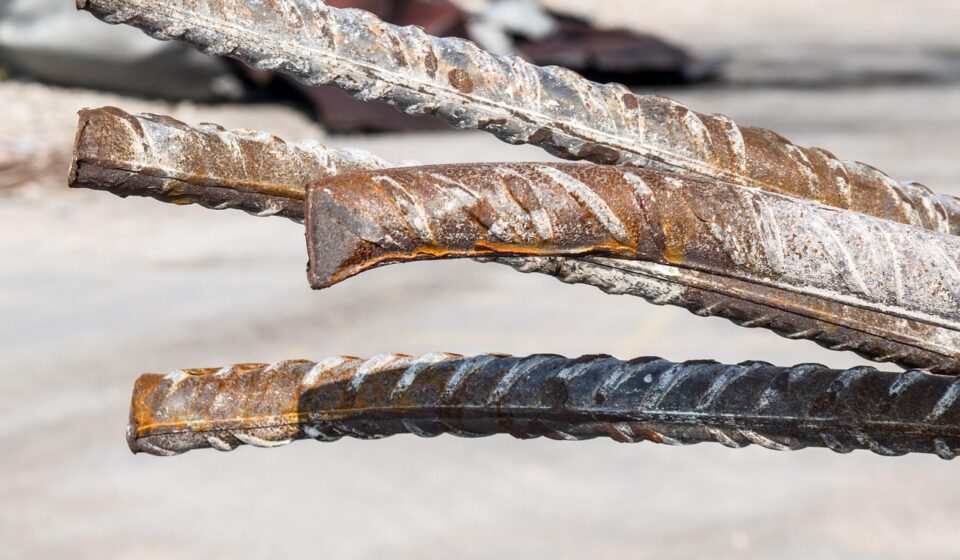
Steel deck can serve as floor or roof support, while deformed reinforcing bars improve the tensile performance of concrete. These products are often hidden after construction, but they are critical to structural performance. Substitution by size, grade or coating should not be treated as a routine purchasing decision because reinforcement layout, lap length, cover and corrosion exposure are part of the engineered design.
Metal roofing, wall panels and accessories
Steel roof and wall panels are envelope materials as much as structural materials. Their performance depends on base metal thickness, coating system, paint finish, panel profile, clips, sealants, underlayment and drainage design. Fasteners, flashing and trim should be treated as part of the system, not as minor accessories. Leaks and corrosion often begin at penetrations, cut edges and incompatible metals.
Why steel remains important in building and infrastructure
The World Steel Association’s World Steel in Figures 2025 reported global steel use of about 1,742 million tonnes in 2024, with building and infrastructure accounting for 52% of that use. That does not mean every project should use more steel, but it explains why steel remains central to construction supply chains. Buildings, bridges, industrial plants, warehouses, utilities and transportation projects all rely on steel in visible and hidden forms.
Steel’s construction value is not limited to strength. It also comes from standardization, fabrication accuracy and compatibility with prefabrication. A frame can be detailed digitally, fabricated off site, delivered in erection sequence and assembled with bolted or welded connections. This can reduce site congestion and improve schedule control, especially where labor access or weather exposure is a constraint.
Even so, steel is rarely chosen on material cost alone. A low price per ton can be misleading if the system needs expensive coatings, fireproofing, complex connection design or long shipping routes. A more useful comparison looks at installed cost, schedule risk, maintenance, adaptability and end-of-life recovery. Steel can perform well on those measures, but only when the full system is evaluated.
How to compare steel options by project function
The most practical way to compare steel building materials is to start with function. A material that works well in one role may be inefficient or risky in another.
| Project function | Common steel option | Key selection questions |
|---|---|---|
| Primary frame | Hot-rolled beams, columns, HSS, plate girders | What loads, spans, seismic or wind demands, connection types and fire ratings apply? |
| Light framing | Cold-formed studs, tracks, joists and purlins | Are bracing, deflection limits, fastener schedules and thermal breaks clearly detailed? |
| Composite floors or roofs | Steel deck and accessories | Is the deck structural, form deck, roof deck or composite floor deck, and how will it attach? |
| Concrete reinforcement | Deformed rebar, welded wire reinforcement, dowels | What grade, coating, bar size, spacing, cover and splice requirements are specified? |
| Envelope | Galvanized or coated steel panels, standing seam roofing, wall cladding | What exposure, drainage, condensation control, coating warranty and panel movement must be handled? |
| Connections | Bolts, welds, screws, anchors, clips and plates | Are connection materials compatible with the base metal and the required inspection level? |
This function-first approach is especially useful for owners reviewing specifications. Instead of asking whether steel is “better,” ask whether the steel product matches the engineering demand, exposure environment and maintenance plan.
Standards and documents that matter
Steel specifications should be tied to recognized standards and project documents. In the United States, structural steel building design commonly references the American Institute of Steel Construction specification ANSI/AISC 360-22. Cold-formed steel framing is associated with AISI and Steel Framing Industry Association documents such as AISI S202 and related framing standards. Welding requirements may reference American Welding Society codes, including AWS D1.1 for structural steel welding when it is specified in contract documents.
Product standards also matter. ASTM A615/A615M covers deformed and plain carbon-steel bars for concrete reinforcement. ASTM A653/A653M covers zinc-coated and zinc-iron alloy-coated steel sheet by the hot-dip process. These examples show why “steel” on a purchase order is not enough. Grade, coating, dimensions, tolerances, finish and testing requirements should be clearly stated.
Before buying or approving substitutions, project teams should request documents that prove compliance. These may include mill test reports, product data sheets, coating information, shop drawings, welding procedure documentation, inspection reports, environmental product declarations and installation instructions. For building envelope products, warranties should be read with exclusions in mind, including coastal exposure, chemical exposure, cut-edge corrosion, under-film corrosion and improper installation.
Local building codes and the authority having jurisdiction remain decisive. A national standard may define performance, but the adopted code edition, permit drawings and engineer-of-record requirements determine what is acceptable on a specific project.
Sustainability, recyclability and lifecycle limits
Steel is widely discussed in sustainability because it has two different realities. On one hand, it is energy-intensive to produce. On the other, it is durable, highly recyclable and often recoverable at the end of a building’s life. Worldsteel’s circular economy materials state that about 680 million tonnes of steel were recycled in 2021, avoiding more than one billion tonnes of carbon dioxide emissions compared with producing the same amount from virgin routes. That recycling value is one reason steel is important in circular construction strategies. See also: BUYER GUIDES.
Recyclability alone should not be used as a shortcut for sustainability claims. A better assessment looks at total material quantity, structural efficiency, product-specific environmental data, transport distance, coating system, maintenance cycles, design life and potential for reuse. The World Green Building Council and Architecture 2030 have both emphasized that embodied carbon must be considered across the building lifecycle, not only at the purchase stage.
Design choices can reduce steel impact without weakening performance. Examples include optimizing spans and member sizes, avoiding unnecessary overdesign, selecting efficient connection details, using standardized lengths to reduce offcuts, designing bolted connections for future disassembly, and requesting product-specific environmental product declarations where available. For envelope systems, long service life and repairability can matter as much as recycled content.
There are also lifecycle risks. Unprotected carbon steel can corrode in wet, marine, industrial or chemically aggressive environments. Steel loses strength as temperatures rise during a fire, so fire-resistance strategies may be required. Cold-formed steel can create thermal bridges in exterior assemblies if continuous insulation or thermal breaks are not properly detailed. These limitations are manageable, but they must be addressed early rather than corrected after installation.
Procurement checklist for steel building materials
Procurement teams can reduce risk by turning design intent into clear purchasing language. The following checklist is a practical starting point:
- Confirm the role of the steel. Separate structural frame, secondary framing, reinforcement, envelope, fasteners and accessories.
- Verify standards and grades. Match the purchase order to the project specification, code requirements and approved drawings.
- Check coating and exposure. Galvanized, painted, weathering, stainless or duplex systems should be chosen for the actual environment.
- Coordinate connections. Bolts, welds, screws, anchors and clips must match strength, corrosion and inspection requirements.
- Review fabrication and lead time. Custom plate work, specialty coatings and long-span members may affect the schedule more than commodity steel availability.
- Plan handling and storage. Wet storage staining, coating damage, bent members and mixed bundles can create avoidable disputes.
- Ask for documentation before delivery. Mill reports, shop drawings, inspection records and installation guides are easier to review before materials arrive on site.
- Control substitutions. A lower-cost product should not replace a specified grade, coating or profile without written technical approval.
This checklist is especially important when steel is sourced through multiple suppliers. A roof panel, a structural beam and a self-drilling screw may all be steel, but their performance requirements are completely different.
Common mistakes to avoid
One common mistake is comparing steel only by weight. Lighter is not always better if it increases deflection, vibration, connection complexity or fireproofing needs. Heavier is not always safer if it wastes material and raises embodied carbon without improving useful performance.
Another mistake is separating design from installation. Steel systems are often precise, but that precision depends on tolerances, sequencing and field coordination. Anchor bolt placement, slab flatness, deck attachment, panel alignment and bracing installation can all affect performance.
A third mistake is overlooking compatibility. Dissimilar metals, aggressive treated wood, trapped moisture, inappropriate fasteners and damaged coatings can shorten service life. For exterior steel products, the accessory package should be reviewed as carefully as the visible panels.
Finally, avoid treating sustainability as a single label. Recycled content, recyclability, low-carbon steelmaking, long service life, reuse potential and efficient design are related but not identical. The strongest sustainability story is usually based on measured data and project-specific choices.
Frequently asked questions
Are steel building materials better than wood or concrete?
They are better for some project goals, not all. Steel is strong, precise, noncombustible and recyclable, while wood may offer lower weight and biogenic carbon benefits, and concrete provides mass, stiffness and fire resistance. The best material depends on structure, code, cost, carbon goals, local supply and maintenance expectations.
Is galvanized steel always required?
No. Galvanized steel is useful where corrosion resistance is needed, especially for exterior or moisture-prone applications, but interior protected structural steel may use other coating systems. The exposure category, design life and compatibility with fasteners should guide the decision.
What documents should buyers request?
For structural and code-regulated materials, request mill test reports, product standards, grade information, coating data, approved shop drawings and inspection records where applicable. For roof and wall systems, also request installation instructions, finish information and warranty terms.
Can steel buildings support circular construction?
Yes, especially when members are bolted, documented and designed for disassembly or future adaptation. Recycling is well established, but direct reuse usually preserves more value than melting and remanufacturing. Planning for access, identification and reversible connections improves future recovery.
What is the biggest procurement risk with steel materials?
The biggest risk is unclear specification. If grade, coating, size, tolerances, connection requirements and applicable standards are not defined, suppliers may quote products that look similar but perform differently. Clear documents and controlled substitutions are essential.