Bamboo building materials for low-carbon construction projects
Why bamboo is moving from craft material to construction specification
Bamboo building materials are no longer confined to decorative screens, temporary shelters or traditional rural housing. They are now specified as engineered panels, flooring, laminated components, facade systems and, in carefully controlled cases, structural applications. The attraction is clear: bamboo grows quickly, can be harvested without killing the plant, and can store biogenic carbon when used in long-life building products. Even so, it is not a drop-in replacement for steel, concrete or timber. For builders and specifiers, the practical question is more specific: where can bamboo perform reliably, how has it been treated, and does the chosen product carry the documentation needed for building approval?
That distinction matters because material choices are under closer scrutiny. Reports from UNEP and the Global Alliance for Buildings and Construction have repeatedly identified buildings and construction as a major source of global carbon dioxide emissions, with cement, steel, aluminium, glass and bricks contributing a significant share of embodied emissions. In that context, fast-growing bio-based materials such as bamboo are attractive, but only when they are specified with the same discipline applied to timber, steel or masonry.
For more industry context on material selection, visit our building materials section.
What counts as bamboo building materials
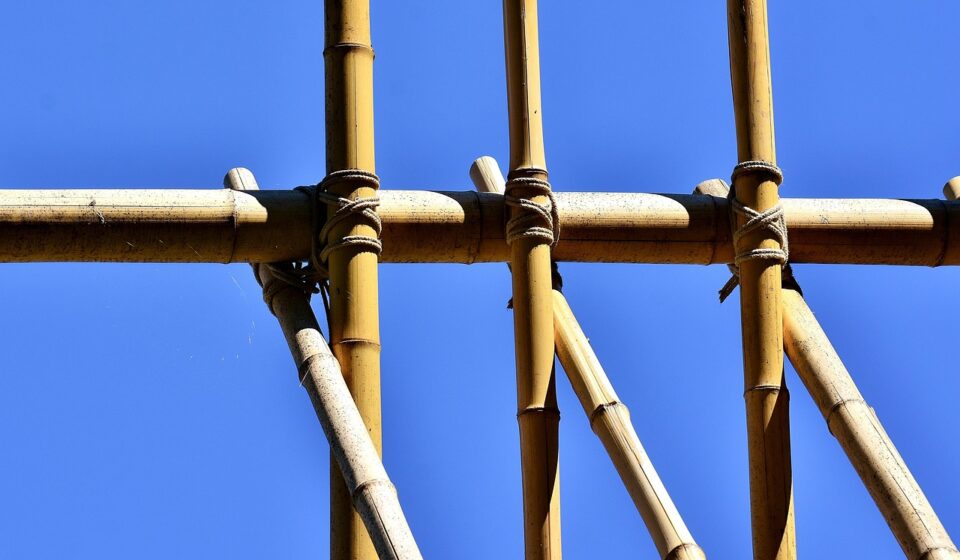
The term covers several product families, and they should not be treated as interchangeable. Full-culm bamboo uses the round pole form of the plant. It can serve as a primary structural member in certain low-rise buildings when design, grading, connections and protection are properly addressed. This is the form covered by ISO 22156:2021, which focuses on structural design for bamboo culms and limits its scope to specific building types and height conditions.
Engineered bamboo is different. Manufacturers split, flatten, laminate, strand, compress or bond bamboo into more regular boards, beams, panels and flooring products. These products are often easier to dimension, machine and integrate with conventional construction systems, but their performance depends heavily on adhesive type, pressing process, density, moisture control and product testing. A laminated bamboo board used for interior fit-out should not be assumed to have the same design basis as a structural member.
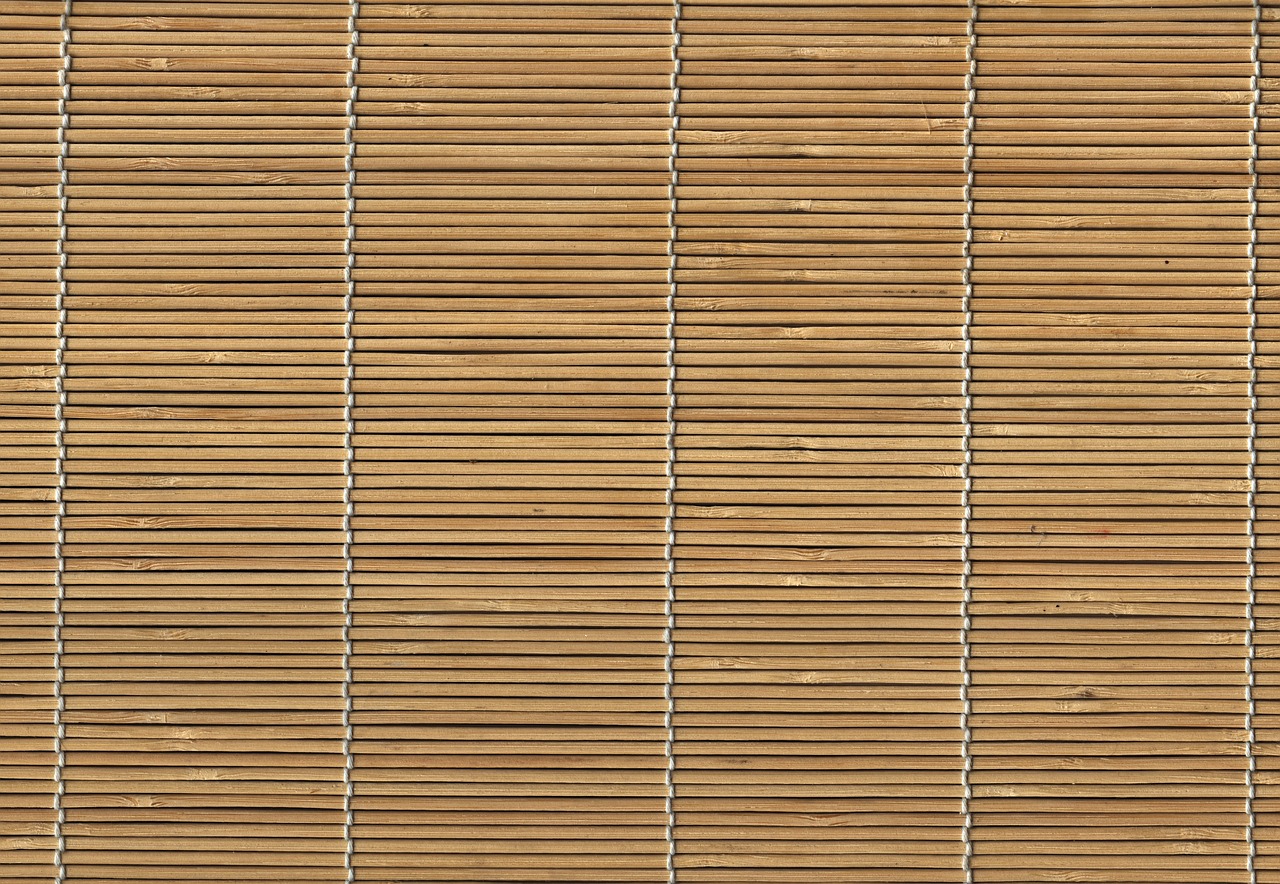
Bamboo composites and secondary products include mats, woven boards, ceiling panels, acoustic finishes, doors, furniture panels, shading devices and cladding elements. These products often compete with wood-based panels, plastics or mineral boards in non-structural applications. Their sustainability profile can be favorable, but it depends on processing energy, resin content, durability and transport distance.
Where bamboo makes the most sense in buildings
Bamboo is most immediately practical in applications where its strength-to-weight ratio, texture and renewability provide value without creating excessive approval risk. Flooring is one of the best-known examples. Strand-woven and laminated bamboo flooring can provide a hard-wearing surface, but buyers should still check finish quality, formaldehyde-related emissions documentation where relevant, moisture movement guidance and warranty conditions.
Interior wall panels, ceilings, screens and millwork are also common uses. In these locations, bamboo is protected from direct weathering, easier to inspect and less exposed to moisture cycling. It can provide a warm natural appearance while reducing reliance on slow-growing hardwoods, provided the supply chain is responsibly managed.
Exterior use is more demanding. Facade boards, soffits and shading elements require treatment, detailing and coating systems that can handle ultraviolet exposure, rain, insects and fungal risk. Designers should avoid specifying untreated bamboo in exposed conditions simply because it looks natural. Natural appearance does not equal natural durability.
Structural use is the most specialized category. Full-culm bamboo can be used in selected one- and two-storey systems under appropriate standards and professional engineering review. The 2025 Institution of Structural Engineers manual for bamboo structures, developed around ISO 22156:2021, reflects the industry’s move toward more formal design guidance. However, it also underlines that structural bamboo requires attention to grading, connections, durability, fire considerations and inspection access.
The technical strengths and limitations to understand
Bamboo’s strengths start with its biology. It is a grass rather than a tree, and many commercial species mature much faster than conventional timber species. This rapid growth supports the case for bamboo as a renewable construction feedstock. Its hollow cylindrical form also gives full culms an efficient strength-to-weight profile, which is one reason bamboo has long been used in scaffolding and vernacular buildings in parts of Asia, Latin America and other regions.
However, variability is the central challenge. Culm diameter, wall thickness, age, species, node spacing, moisture history and harvesting conditions can all affect performance. Unlike sawn timber, which can be graded into familiar product sizes, full-culm bamboo starts as an irregular natural tube. That makes testing, grading and conservative design essential.
Connections are another limiting factor. Bolting, lashing, fish-mouth cuts, mortar infill and steel connectors can all be used in different systems, but each approach changes how forces move through the culm. Poor connection design can split the bamboo or create hidden durability problems. A strong culm does not automatically create a strong structure.
Moisture and biological attack are equally important. Bamboo contains nutrients that can attract insects if the material is not properly treated. It can also deteriorate if trapped moisture cannot dry. For this reason, good bamboo construction usually follows a keep-it-dry and inspectable approach: raised bases, roof overhangs, drip edges, ventilated cavities, replaceable members, breathable detailing and planned maintenance.
Standards and code approval are the make-or-break issue
For mainstream construction, documentation matters as much as the material itself. ISO 22156:2021 provides an international reference for the structural design of bamboo culms. ISO 22157:2019 sets out test methods for determining physical and mechanical properties of bamboo culms. These standards are important because they move bamboo away from informal rule-of-thumb building and toward verifiable design values. See also: BUYER GUIDES.
Still, international standards do not automatically equal local building approval. Building officials, insurers and engineers may require product-specific test reports, fire data, durability evidence, structural calculations, treatment records and inspection procedures. In the United States and some other markets, acceptance criteria and evaluation reports may be relevant for specific structural bamboo systems, but project teams must confirm the current local pathway before specifying the material.
This is especially important for engineered bamboo products. A panel marketed as sustainable may be suitable for furniture or interior finish but not for a load-bearing beam. Product datasheets should clearly state intended use, mechanical properties, moisture limits, adhesive standards, emissions class, fire performance and installation requirements. If those documents are missing, the specification should be limited or rejected for higher-risk applications.
How bamboo compares with timber, steel and concrete
| Material choice | Potential advantage | Main caution |
|---|---|---|
| Bamboo | Fast-growing, renewable, lightweight and suitable for panels, finishes and selected structures | Requires treatment, grading, moisture protection and code documentation |
| Timber | Established codes, familiar detailing and broad engineered product range | Supply depends on forestry practices, species availability and certification |
| Steel | High strength, predictable properties and long-span capability | Energy-intensive production and corrosion protection requirements |
| Concrete | Mass, fire resistance, compressive strength and wide availability | High cement-related emissions and heavy weight |
This comparison shows why bamboo should be treated as a complementary material, not a universal substitute. It may reduce the amount of higher-carbon material in some elements, especially finishes, screens, lightweight assemblies and certain low-rise structural systems. But in many projects it will not remove the need for concrete foundations, metal fasteners, fire-safe assemblies or engineered verification.
The strongest case for bamboo appears when it is locally or regionally available, properly treated, used in long-life products and detailed to avoid early replacement. If a bamboo product is shipped long distances, bonded with high-impact resins, poorly protected from weather and replaced frequently, its environmental advantage can shrink quickly.
Specification checklist for builders and designers
Before using bamboo building materials in a project, teams should ask practical questions rather than relying on broad sustainability claims.
- What is the product type? Full culm, laminated board, strand-woven product, panel, veneer and composite products have different design assumptions.
- Is the application structural or non-structural? Structural use needs engineering review, test values and approval routes; decorative use still needs fire, emissions and durability checks.
- What treatment has been used? Confirm protection against insects, fungi and moisture-related decay, especially for exterior or semi-exposed use.
- What standards or test reports support the product? Look for relevant ISO references, third-party testing, evaluation reports or local compliance documentation.
- How will the material dry? Avoid details that trap water inside culms, behind cladding or at concealed connections.
- Can damaged pieces be inspected and replaced? Replaceability is a practical durability strategy for bio-based materials.
- What adhesives and finishes are used? Resin systems can affect emissions, fire behavior, recyclability and life-cycle impact.
- Is the supply chain reliable? Consistent species, age, treatment and quality control matter more than a generic bamboo label.
What to watch as the market develops
The next stage for bamboo in construction will likely depend on standardization and product reliability. Research published in recent years has highlighted opportunities for engineered bamboo materials, but it also points to barriers such as variable raw culms, processing cost, recovery rates, resin impacts and gaps in code acceptance. These are not reasons to dismiss bamboo; they are the normal hurdles a material must clear to move from niche use into broader construction markets.
For manufacturers, the opportunity is to provide clearer product data, better treatment systems and assemblies that fit conventional design workflows. For architects and contractors, the opportunity is to use bamboo where it adds measurable value rather than treating it as a symbolic green surface. For building owners, the key is durability: a material that lasts, can be maintained and performs as promised will always be more sustainable than one chosen only for its label.
Frequently asked questions
Is bamboo a reliable building material?
It can be reliable when the product is suitable for the application, properly treated, supported by test data and detailed to manage moisture. Untreated or undocumented bamboo should not be used in critical applications.
Can bamboo replace timber in construction?
Bamboo can replace or reduce timber in some finishes, panels, flooring and selected engineered products. It is not a simple one-for-one replacement for structural timber unless the bamboo system has appropriate design data and approval.
Is bamboo suitable for outdoor use?
Outdoor use is possible, but it requires preservation, protective coatings, ventilation, drainage and inspection. Exposed bamboo without treatment or good detailing is at risk of premature deterioration.
What is the main disadvantage of bamboo building materials?
The main disadvantage is variability. Species, age, wall thickness, moisture content, processing and treatment can all affect performance, so consistent quality control is essential.
Are bamboo building materials sustainable?
They can be, especially when bamboo is responsibly sourced, processed efficiently, transported reasonably, used for long-life products and maintained well. Sustainability should be verified through the full product and building context, not assumed from the plant alone.