How to buy used building materials without code or safety problems
Used building materials are useful when reuse follows the rules
Used building materials can be a practical choice when the item can be inspected, remains fit for purpose, and suits the location where it will be installed. Reclaimed brick, solid wood doors, cabinets, stone, pavers, hardware, and architectural pieces often have strong reuse potential. Structural members, fire-rated assemblies, electrical devices, plumbing components, windows, insulation, and products with unknown coatings need much more caution.
The working rule is straightforward: reuse may reduce waste, but it does not reduce the duty to meet code, health, moisture, fire, and performance requirements. For more industry context, see the building materials section.
Why used building materials matter in construction waste
The environmental case for reuse is strongest when a material can go back into service with limited processing. The U.S. Environmental Protection Agency reported that the United States generated about 600 million tons of construction and demolition debris in 2018. That was more than twice the amount of municipal solid waste generated in the same year. EPA also reported that demolition represented more than 90 percent of total C&D debris generation, while construction represented less than 10 percent.
This distinction matters for procurement. Much of the recoverable material appears at the end of a building, road, bridge, or renovation cycle, not at the start of a new project. EPA estimated that about 455 million tons of C&D debris were directed to a next use in 2018, while just under 145 million tons were sent to landfills. However, next use is not the same as direct reuse. Depending on the material, next use may include aggregate, manufactured products, fuel, mulch, compost, or soil amendment. A door reused as a door is different from concrete crushed into aggregate or wood ground into mulch.
| Material category in EPA 2018 C&D data | Estimated generation | What it means for reuse decisions |
|---|---|---|
| Concrete | About 405 million tons | Often recovered as aggregate rather than reused as whole units. |
| Asphalt concrete | About 107 million tons | Commonly processed for pavement-related next uses. |
| Wood products | About 40.8 million tons | Can have reuse value, but condition, moisture, pests, coatings, and grading are critical. |
| Drywall and plaster | About 15.2 million tons | Usually difficult to reuse as finished building material once removed. |
| Brick and clay tile | About 12.3 million tons | Reusable when units are sound and mortar removal does not damage them. |
| Steel | About 4.7 million tons | High recycling value, but structural reuse needs verification and documentation. |
The opportunity is not to treat every salvaged item as automatically green. It is to select materials where reuse preserves value, avoids unnecessary new production, and does not create hidden safety or compliance risks.
Where used materials usually make the most sense
The best candidates are materials that can be visually inspected, measured, cleaned, and installed without relying on hidden performance claims. They should also be reasonably easy to remove again if a problem appears. Decorative and noncritical materials are usually easier to reuse than materials that protect life safety, resist weather, carry structural loads, or form part of a rated assembly.
Good candidates for many projects
- Solid interior doors, door slabs, and some hardware when sizes and fire-rating needs are clear.
- Cabinets, shelving, trim, mantels, and millwork that are dry, stable, and free of hazardous coatings.
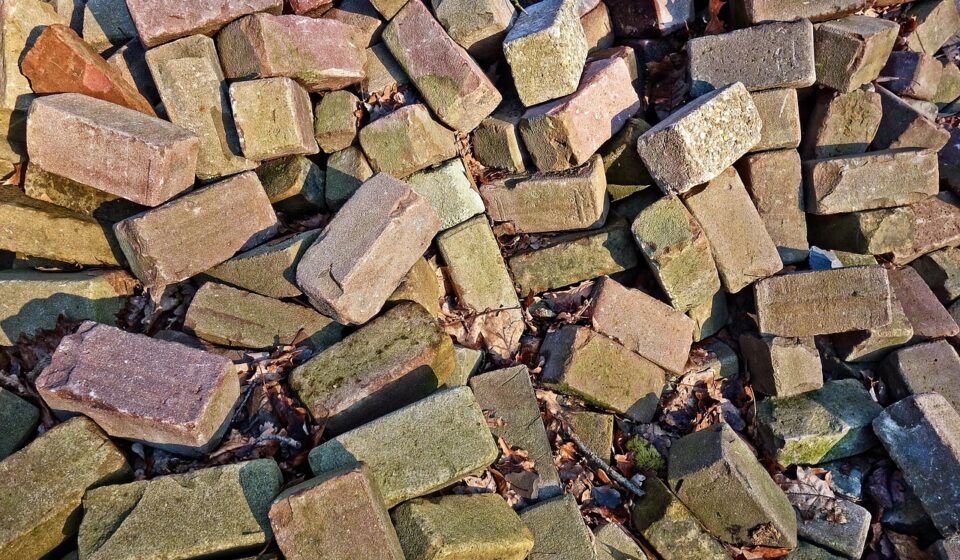
- Reclaimed brick, stone, tile, and pavers that are not cracked, spalled, or contaminated.
- Architectural salvage such as railings, grilles, decorative panels, and lighting housings when electrical parts are replaced or inspected.
- Dimensional lumber for nonstructural uses after checking straightness, moisture, fastener damage, insect activity, and prior treatment.
Materials that need professional review
- Structural lumber, beams, columns, trusses, engineered wood, and steel members.
- Windows and exterior doors where water control, energy performance, egress, safety glazing, or wind resistance matters.
- Electrical panels, breakers, wiring devices, and lighting components that depend on listing, labeling, and safe installation.
- Plumbing fixtures, valves, and pipe where corrosion, lead content, pressure rating, or sanitation could be an issue.
- Insulation, drywall, carpet, ceiling tile, and other porous products that may hold moisture, mold, odors, smoke, or contaminants.
A used product is not a bargain if it forces redesign, fails inspection, delays the job, or introduces a hazard that was not visible at purchase.
Code, health, and documentation checks come first
The International Building Code has long allowed the use of used materials when they meet the code requirements for new materials. Used equipment and devices are typically subject to approval by the code official. Because the IBC is a model code and local jurisdictions adopt and amend codes differently, the practical step is to ask the local building department before buying reused items for permitted work.
Documentation is often the dividing line between a reusable component and a risky purchase. Some materials need labels, listings, grade stamps, test reports, installation instructions, or manufacturer identification. A missing label may not matter for a decorative shelf, but it can matter for a fire door, safety glazing, electrical device, structural connector, or rated assembly. When the code relies on listing and labeling, an inspector may not accept an unlabeled used item even if it appears sound.
Health hazards can change the decision. EPA’s Renovation, Repair and Painting Rule generally requires certified firms and trained workers when paid work disturbs paint in pre-1978 housing and child-occupied facilities. That does not mean every old painted item contains lead, but it does mean old painted trim, doors, windows, cabinets, and siding should be treated cautiously until tested or evaluated by qualified people.
Asbestos is another reason not to salvage blindly. EPA’s asbestos NESHAP rules regulate many demolition and renovation operations at institutional, commercial, and industrial buildings, and EPA notes that a thorough inspection is a minimum requirement in those settings. Older flooring, mastics, siding, pipe insulation, ceiling products, and other materials may require professional assessment before removal or reuse.
Moisture history matters as much as age. EPA flood cleanup guidance notes that mold can grow on wood, drywall, carpet, and furniture if they remain wet for more than 24 hours. FEMA’s 2025 technical guidance for the National Flood Insurance Program also explains that flood-damage-resistant materials are required below the base flood elevation in Special Flood Hazard Areas. In practical terms, a material that is acceptable in a dry interior may be inappropriate below flood elevation or in another high-moisture location.
A practical inspection checklist before purchase
Buyers should inspect used materials with the same discipline they would apply to new materials, plus extra attention to unknown history. This checklist helps separate reusable value from avoidable risk.
- Confirm the intended use. Decide whether the material will be decorative, nonstructural, structural, exposed to weather, part of a fire-rated assembly, or used in a wet area.
- Measure everything. Check length, width, thickness, squareness, quantity, and tolerances. Older materials may not match modern nominal dimensions.
- Check condition under good light. Look for cracks, rot, warping, delamination, corrosion, spalling, insect holes, missing parts, and previous repairs.
- Look for labels and markings. Grade stamps, safety glazing marks, fire labels, listing labels, and manufacturer information can determine whether the item is usable in permitted work.
- Ask about removal history. Materials removed carefully during deconstruction usually have better reuse potential than materials pulled during fast demolition.
- Screen for hazardous coatings or residues. Painted, glued, insulated, or treated materials from older buildings may need testing before sanding, cutting, or installation.
- Check moisture and storage. Avoid porous materials that were stored outdoors, exposed to flooding, or stacked without airflow.
- Estimate extra labor. Cleaning, de-nailing, cutting, testing, refinishing, transport, and storage can erase the apparent price advantage.
- Plan for waste. Buy enough extra to account for breakage, hidden defects, and future repairs, especially for brick, tile, flooring, and trim.
- Confirm inspection acceptance early. For code-sensitive items, ask the authority having jurisdiction before the material is installed.
How to plan reused materials into a project
Reused materials work best when they are designed into the project early rather than forced in at the end. A designer or contractor needs accurate quantities, dimensions, condition notes, and photos before committing to layouts. This is especially important for salvaged flooring, brick, doors, windows, tile, and trim, where matching replacements may be unavailable later. See also: BUYER GUIDES.
Schedule is another constraint. New materials can often be reordered from the same product line. Used materials are usually finite. If a batch sells, breaks, or proves unusable, the project may need a substitution. Reclaimed materials are therefore easier to use in feature areas, accent walls, outbuildings, furniture, landscape work, or rooms where small variations are acceptable. They are harder to use in tightly specified assemblies that require identical components, warranties, ratings, or documented performance.
Storage should be part of the plan. Keep wood and porous materials dry, elevated, and ventilated. Stack brick, stone, and tile so edges do not chip. Protect hardware and metal parts from corrosion. Label batches by source, size, and intended location. Good storage protects material value and helps installation crews work efficiently.
For larger projects, a simple material schedule can prevent confusion. List each reused item, its source, quantity, intended location, required preparation, required approvals, and backup plan. This turns salvage from a hopeful purchase into a managed construction input.
Cost savings are real but not automatic
Used building materials may cost less than comparable new products at the point of purchase, but total installed cost can move in either direction. Savings are more likely when the material is local, already cleaned, available in sufficient quantity, easy to install, and used in a place where small variations add character rather than create defects. Costs rise when the material needs testing, refinishing, custom fitting, special fasteners, long-distance transport, or repeated inspection visits.
A useful comparison is not used price versus new price. It is installed used cost versus installed new cost, including labor, waste factor, schedule risk, compliance checks, and future maintenance. For a reclaimed mantel or antique brick feature, extra labor may be justified by appearance and avoided waste. For hidden plumbing, unknown electrical devices, wet insulation, or unlabeled fire-rated components, new certified products are often the more reliable choice.
The environmental calculation is also context-specific. Direct reuse can preserve embodied value, especially when a durable item replaces a new product with minimal processing. But transporting small quantities over long distances, refinishing with high-impact chemicals, or discarding a large share of unusable salvage can reduce the benefit. Local sourcing, careful selection, and realistic planning make the sustainability argument stronger.
Frequently asked questions
Are used building materials allowed by code?
They can be allowed, but not automatically. The International Building Code approach is that used materials must meet the requirements that apply to new materials, and used equipment may need approval from the code official. Local adoption and amendments matter, so permitted work should be checked with the local authority before purchase or installation.
What used building materials should homeowners avoid?
Homeowners should be cautious with structural members, electrical devices, plumbing parts, fire-rated products, safety glazing, insulation, drywall, and any material with unknown water, mold, asbestos, or lead history. Some may be reusable after professional review, but they are not good impulse buys.
Is reclaimed wood safe to use?
Reclaimed wood can be safe for suitable uses when it is dry, sound, free of active pests, properly de-nailed, and appropriate for the application. Structural use may require grading, engineering review, or approval. Painted or coated wood from older buildings should be evaluated for lead or other hazards before cutting, sanding, or installation.
Do used materials always save money?
No. The purchase price may be lower, but cleaning, transport, refinishing, testing, fitting, waste, and inspection delays can change the economics. Used materials make the most financial sense when the buyer can verify quality before purchase and the project can tolerate limited quantities or natural variation.
What is the safest way to start using reclaimed materials?
Start with visible, nonstructural, low-risk applications such as decorative brick, shelving, trim, cabinets, pavers, or furniture-related uses. Build experience with measuring, cleaning, storage, and installation before relying on used materials in structural, weatherproofing, fire-safety, or code-sensitive assemblies.