Scandinavian design furniture explained for warm modern homes
What Scandinavian design furniture means today
Scandinavian design furniture is not just a pale sofa in a white room. It is a furniture language built around useful forms, restrained detailing, honest materials, and comfort that holds up in daily life. In modern homes, it can make a room feel calm without making it feel bare. The best pieces usually do three things at the same time: solve a practical problem, show the character of wood or textile, and keep proportions light enough for changing layouts.
For readers comparing styles, the key distinction is simple: Scandinavian furniture is warmer than strict minimalism and more function-led than decorative rustic design. It can include classic Nordic modern chairs, contemporary oak storage, compact apartment furniture, and softly upholstered seating. Explore more related ideas in our Furniture Design section.
The principles behind the look
The most repeated words in discussions of Scandinavian design are simplicity, functionality, and natural materials. They are accurate, but too broad on their own. In furniture terms, a chair is not simple because it lacks decoration. It is simple because every line should help it sit well, move easily, age gracefully, or fit into daily routines.
Function comes before decoration
Scandinavian furniture developed around the idea that domestic objects should serve ordinary life. A dining chair needs a comfortable back angle before it needs a fashionable silhouette. A sideboard needs clear storage logic before it needs a dramatic handle. This is why many strong Scandinavian pieces look modest at first glance but become more convincing with use.
Natural materials carry the expression
Instead of relying on heavy ornament, the style often lets wood grain, woven cord, wool texture, leather patina, and matte finishes do the visual work. Light-toned woods such as oak, ash, birch, beech, and pine are common because they brighten interiors and connect furniture to the Nordic landscape. Darker woods can also appear, especially as accents, but they are usually balanced with clean profiles and open space.
Comfort is part of function
A common misunderstanding is that Scandinavian design means hard, austere furniture. Museum summaries of Nordic modernism, including those discussing Alvar Aalto and postwar Danish furniture, consistently emphasize a softer and more human approach to modern design. Rounded corners, shaped plywood, woven seats, angled backs, and tactile upholstery all show that comfort is not a compromise; it is one of the style’s central tests.
A short timeline of Scandinavian furniture influence
Scandinavian design furniture is often marketed as timeless, but it did not appear all at once. It developed through craft traditions, early modernist thinking, postwar international exhibitions, and later retail adaptations. The timeline below helps separate historical influence from current styling.
| Period | What changed | Furniture impact |
|---|---|---|
| Early 20th century | Nordic designers connected craft knowledge with functional modern design. | Furniture became cleaner, lighter, and more focused on everyday use. |
| 1930s | Designers such as Alvar Aalto explored bent wood, plywood, and organic forms. | Wood became a modern material, not only a traditional one. |
| Postwar 1950s | Scandinavian and Danish modern furniture gained wider international attention. | Chairs, tables, and storage pieces showed refined joinery, human proportions, and restrained ornament. |
| Late 20th century | Minimalist and functional home ideals returned through mass-market interiors. | The look became more accessible, but quality varied widely. |
| 2020s | Durability, repair, lower-waste sourcing, and certification became more important in furniture decisions. | The best interpretation is less about copying a look and more about choosing pieces that can last. |
This history matters because it prevents a narrow reading of the style. Scandinavian furniture is not only a mid-century vintage category, and it is not only a low-cost modern retail look. At its strongest, it is a design approach that links material honesty, comfort, and long service life.
Materials, colors and forms that define the style
Wood and finish
Wood is the foundation of many Scandinavian interiors, especially where furniture needs to feel warm without looking heavy. Oak is popular for its durability and balanced grain. Ash and beech can look lighter and more elastic. Birch is closely associated with Nordic modern design and laminated wood experiments. Pine can feel rustic or contemporary depending on the profile, finish, and joinery.
Matte, oiled, or low-sheen finishes usually fit better than thick glossy coatings. The aim is to make the surface feel touchable and repairable. In practical terms, buyers should ask how a tabletop can be cleaned, whether small scratches can be treated, and whether the manufacturer provides clear care instructions.
Textiles and tactile contrast
Scandinavian rooms often use furniture textiles to soften simple forms. Wool, linen blends, cotton, leather, sheepskin-style textures, and woven paper cord can all fit the language. The important point is not whether a fabric looks trendy, but whether it adds tactility without overwhelming the form. A neutral wool sofa, for example, can gain depth from weave and shadow rather than a loud pattern.
Color and proportion
The classic palette includes white, warm gray, oatmeal, sand, clay, muted blue, forest green, and black accents. These colors are useful because they allow wood and silhouette to remain visible. Proportion is just as important. Look for slim legs, raised bases, rounded edges, open backs, and storage that appears lighter than its actual volume. In small apartments, these details can make a room feel more spacious without reducing function.
How to choose pieces that last
The durability question is not a side issue. According to the U.S. Environmental Protection Agency’s product-specific municipal waste data, furniture and furnishings accounted for 12.1 million tons of U.S. municipal solid waste generation in 2018, or 4.1 percent of total MSW. The same EPA dataset reported that 80.1 percent of this furniture and furnishings category was landfilled and 19.5 percent was combusted with energy recovery in 2018. The EPA still identifies 2018 as the latest national Facts and Figures dataset, so it should be treated as a baseline rather than a 2026 total.
That context changes how Scandinavian design furniture should be evaluated. A piece that looks minimal but fails quickly is not very Scandinavian in spirit. Longevity, repairability, and adaptable use matter as much as color or silhouette.
- Check the structure. For tables and chairs, look for stable joinery, strong leg connections, and hardware that can be tightened or replaced.
- Read the material description. Solid wood is valuable, but high-quality veneer over a stable core can also be appropriate when it is honestly specified.
- Consider repair and maintenance. Removable cushion covers, replaceable glides, accessible screws, and available spare parts can extend service life.
- Ask about wood sourcing. The Forest Stewardship Council is commonly used to verify responsibly managed forest sources through chain-of-custody certification.
- For commercial or home-office furniture, check standards. BIFMA describes ANSI/BIFMA standards as a basis for evaluating safety, durability, and structural adequacy in business and institutional furniture. Its LEVEL program addresses broader furniture sustainability criteria.
Price alone does not prove durability. Some expensive furniture is fragile, and some modest pieces are well engineered. The better question is whether the design gives evidence of long use: stable construction, replaceable parts, suitable materials, and a form that does not depend on one short-lived trend. See also: BUILDING MATERIALS.
Scandinavian, mid-century modern and Japandi are related but different
Searches for Scandinavian furniture often overlap with mid-century modern and Japandi. The overlap is understandable, but the terms are not identical. Knowing the difference helps prevent mixed interiors from feeling accidental.
| Style term | Main emphasis | Typical furniture cues |
|---|---|---|
| Scandinavian design | Everyday function, comfort, lightness, and natural materials. | Pale wood, clean storage, soft upholstery, slim legs, and practical forms. |
| Danish modern | A refined branch of Nordic modern furniture, especially strong in chairs and cabinetry. | Sculptural wood frames, precise joinery, paper cord, teak or oak, and highly resolved seating. |
| Mid-century modern | A broader international modern style associated with the 1940s to 1960s. | Tapered legs, molded plywood, fiberglass, walnut, glass, metal, and expressive silhouettes. |
| Japandi | A contemporary blend of Japanese restraint and Nordic warmth. | Low profiles, muted palettes, visible craft, natural textures, and very controlled decoration. |
A room can combine these influences, but it should still have a clear hierarchy. If the main goal is Scandinavian warmth, keep the palette lighter, the storage practical, and the textiles inviting. If the goal is mid-century drama, darker woods and stronger silhouettes can play a larger role. If the goal is Japandi calm, reduce contrast and choose lower, quieter forms.
Room-by-room specification notes
Dining area
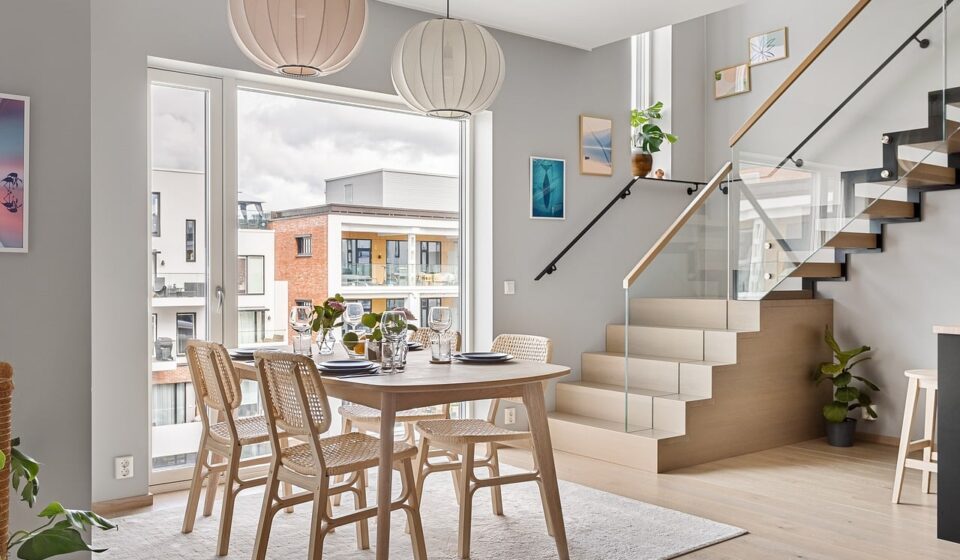
A Scandinavian dining area should feel sociable rather than formal. Choose a table with enough clearance for real use, not only a beautiful top surface. Extension leaves can be useful for apartments and flexible family spaces. Chairs should be tested for back support, seat depth, and weight. Woven seats, molded plywood shells, and upholstered pads can all work if they suit the level of daily use.
Living room
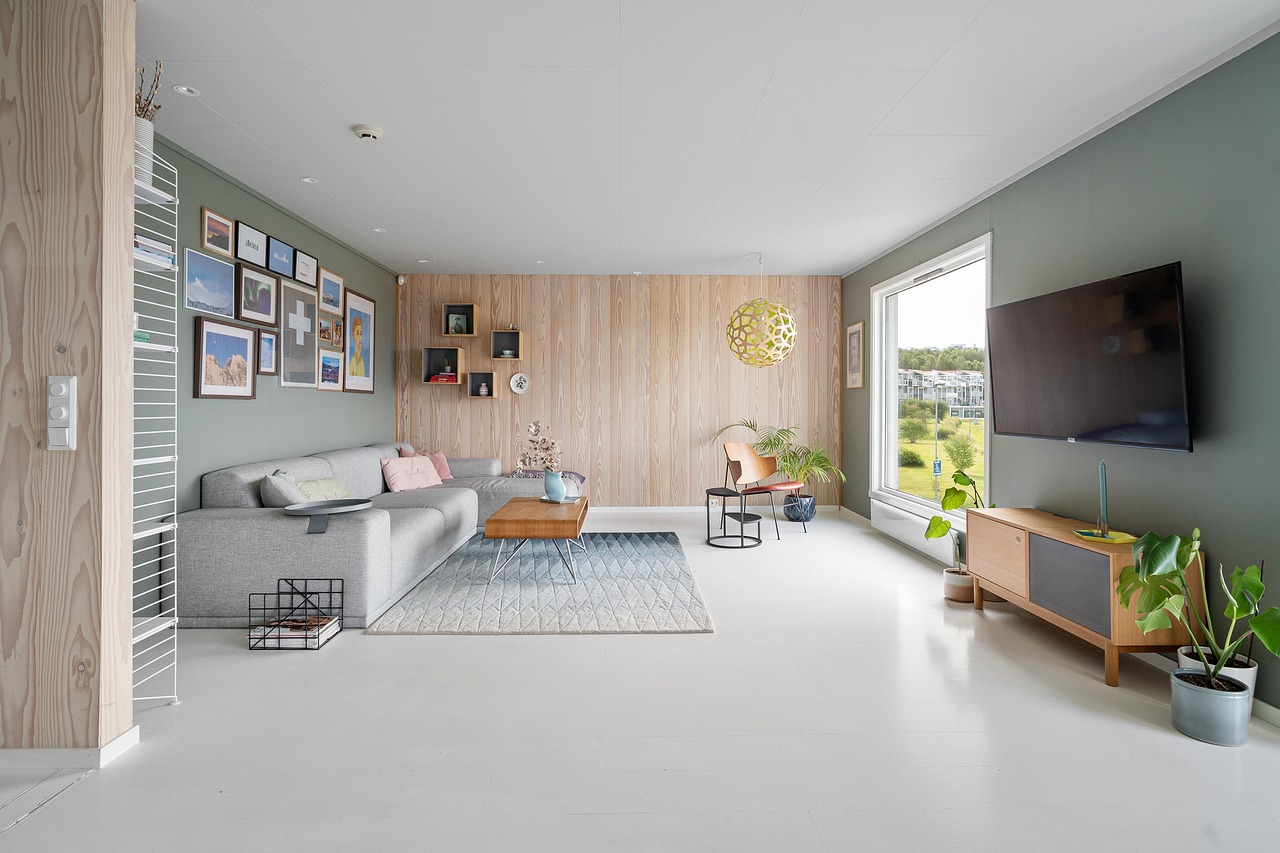
For sofas and lounge chairs, avoid choosing only from front-facing photography. Check the side profile, leg height, cushion construction, and fabric cleanability. Scandinavian living rooms often benefit from one grounded upholstered piece, one exposed-wood accent chair, and a simple coffee table that leaves circulation space. Texture can come from wool, linen, grain, and rugs rather than extra decoration.
Bedroom and entry storage
Storage is where Scandinavian thinking becomes especially practical. Closed storage reduces visual noise, while raised legs and simple pulls keep case goods from feeling bulky. In bedrooms, look for nightstands and wardrobes that solve cable, drawer, and clothing needs cleanly. In entries, benches with shoe storage, narrow consoles, and wall hooks support daily routines without crowding the threshold.
Home office
A Scandinavian home office should not sacrifice ergonomics for appearance. A beautiful desk still needs correct working height, cable management, and enough surface area. Office chairs should be selected for adjustability and support first, then matched visually through color and material. Where a project requires performance documentation, relevant ANSI/BIFMA standards or equivalent regional standards may matter more than style labels.
Common mistakes to avoid
- Making everything white. Scandinavian interiors use light, but they also need warmth, shadow, and texture.
- Ignoring scale. A slim chair can still be too wide for a small room, and a low sofa can look awkward with tall storage.
- Buying the silhouette without the quality. Tapered legs and pale wood do not guarantee good construction.
- Confusing democratic design with disposable furniture. Accessibility should mean useful, well-considered design, not short product life.
- Overmixing icons. Too many statement chairs can make a room feel like a showroom instead of a home.
The most convincing Scandinavian spaces usually feel edited, not empty. They give each piece enough room to function and enough material quality to be noticed slowly.
Frequently asked questions
What is Scandinavian design furniture?
It is furniture influenced by Nordic design principles such as function, simplicity, comfort, natural materials, and restrained form. In the global market, the term often includes wider Nordic modern influences from Denmark, Sweden, Norway, Finland, and Iceland, even though Scandinavia has a narrower geographic meaning.
Is Scandinavian furniture the same as minimalist furniture?
No. Scandinavian furniture can be minimal, but it is usually warmer and more tactile than strict minimalism. It often uses wood, woven textures, soft upholstery, and rounded forms to make simple rooms feel comfortable.
Which wood is best for Scandinavian furniture?
There is no single best wood. Oak, ash, beech, birch, and pine all fit the style when the design is well proportioned and the finish is appropriate. The better choice depends on use, durability needs, budget, sourcing, and maintenance.
Can Scandinavian design furniture work in a colorful home?
Yes. The furniture’s clean lines and natural materials can support color well. For the strongest result, keep the main furniture forms calm and add color through textiles, art, lighting, or one painted storage piece.
How do I know if a piece is worth buying?
Look beyond the label. Check construction, material transparency, comfort, repair options, care guidance, and whether the piece solves a real need in your room. A good Scandinavian-inspired piece should still feel useful after the trend around it changes.