Trex installation guide 2022 explained for decking, gapping, fascia, and fasteners

What the 2022 guide covers
The Trex installation guide 2022 is a manufacturer snapshot for Trex decking, fascia, fasteners, stairs, rooftop and sleeper systems, metal framing, warranties, and related planning notes. It is useful when reviewing a deck built in that period, comparing installer work with the published instructions, or checking common Trex requirements such as joist spacing, board gapping, and approved fasteners.
For a current build, the 2022 guide should not be treated as the final authority. Trex notes that construction methods are updated over time, and public Trex literature checked on September 11, 2026 showed a newer 2026 decking installation guide. Use the 2022 guide for context, then confirm current details with the latest manufacturer instructions, local code, and the building official.

For more project notes in this category, visit our Installation Guides archive.
What changed in the 2022 edition
The 2022 guide identified three notable updates near the front of the document. These were specific content additions and revisions rather than broad design claims, and each one affected planning or installation details.
| 2022 update | Where it mattered | Why installers should notice |
|---|---|---|
| Trex Lattice was added | Planning section | It reminded readers that lattice planning, cutting, drilling, routing, fastening, and warranty details may differ from decking boards. |
| Trex fascia recommendations were updated | Fascia installation section | Fascia movement, fastener placement, approved fascia screws, spacers, and adhesive details are frequent sources of field mistakes. |
| Trex Hideaway One-Step Hidden Fastener Tool instructions were added | Hidden fastener section | The tool changed the workflow for installing hidden fasteners by combining steps that otherwise required separate fastening actions. |
The practical point is that Trex installation documents are not static. A homeowner may find a 2022 PDF in project paperwork, but a contractor quoting a job today should verify the current guide before ordering fasteners, setting framing, or submitting permit drawings.
Planning and framing numbers to confirm before decking
The 2022 Trex guide placed major emphasis on planning before boards are installed. Trex advised mixing boards on site, especially streaked or tropical color boards, so the finished deck has a balanced blend of tones. It also warned not to combine Trex Select decking with other Trex decking products because Select boards were thinner than Transcend and Enhance boards in that guide.
Framing is the larger technical issue. Trex decking is a surface product, not a structural member. The 2022 instructions said code-approved structural material should be used for framing and joists, local building code restrictions should be checked, and Trex decking should not be attached directly to a solid surface or watertight system. That matters because a deck board follows the condition of the frame below it. If the frame is out of plane, improperly spaced, or unable to drain, the finished deck can show waves, movement, trapped moisture, or premature defects.
The 2022 span chart gave these on-center joist spacing limits for decking:
| Decking profile | Residential decks, light-duty docks, residential or day-care playgrounds at 100 psf | Commercial decks, boardwalks, and marinas at 100 psf | Commercial decks, boardwalks, and marinas at 200 psf |
|---|---|---|---|
| 1 in. boards and 0.875 in. Select boards | 16 in. on center | 16 in. on center | 12 in. on center |
| 2 x 6 boards | 24 in. on center | 24 in. on center | 16 in. on center |
Angled decking reduces allowable spans. The 2022 guide stated that a 60-degree installation reduces the listed span by 2 in., a 45-degree installation reduces it by 4 in., and a 30-degree installation uses one-half of the listed span. Heavy features such as hot tubs, large planters, built-in seating, fireplaces, and fire pits should be reviewed with a local engineer or inspector rather than treated as ordinary foot traffic loads.
Gapping, overhang, and airflow rules
Gapping is one of the most commonly checked parts of any Trex installation guide because composite decking moves with temperature and also needs drainage. In the 2022 document, Trex said boards must be gapped both end-to-end and width-to-width. The guide explained that these gaps allow drainage, thermal expansion and contraction, and movement of the wood joist system below.
| Condition in the 2022 guide | Required or recommended gap |
|---|---|
| End-to-end or end-to-width above 40°F | 1/8 in. |
| End-to-end or end-to-width below 40°F | 3/16 in. |
| Abutting a wall or solid object above 40°F | 1/4 in. |
| Abutting a wall or solid object below 40°F | 1/2 in. |
| Width-to-width minimum in normal conditions | 3/16 in. |
| Docks and heavily wooded areas | 3/8 in. recommended |
| Maximum gap stated in this section | Do not exceed 1/2 in. |
The 2022 guide also said hidden fasteners establish the designated width gap when they are used correctly. That does not remove the need to plan end gaps, abutting gaps, drainage, and framing layout. Butt joints, breaker boards, and picture-frame borders still need framing support under board ends.
Overhang language is another reason to check the edition being used. The 2022 guide stated a maximum allowable perpendicular overhang of 1/2 in. for all Trex decking. Later Trex literature uses updated overhang language in some sections. If an inspector, warranty reviewer, or contractor is comparing a deck with current instructions, use the current manufacturer document rather than assuming the 2022 number is still the only applicable requirement.
Air circulation is part of the gapping conversation. The 2022 guide said all decks require airflow to stay dry and recommended leaving openings under the decking or increasing gapping to 3/8 in. where more airflow is needed. That advice is especially relevant for low decks, shaded decks, wooded locations, and spaces where debris can accumulate.
Fasteners and fascia details
The 2022 guide made a clear warranty point: conditions attributable to non-recommended fasteners were not covered under the Trex Limited Warranty. In practice, the fastener schedule is not just a cosmetic preference. It affects board holding, movement control, warranty review, and the finished appearance of the deck surface.
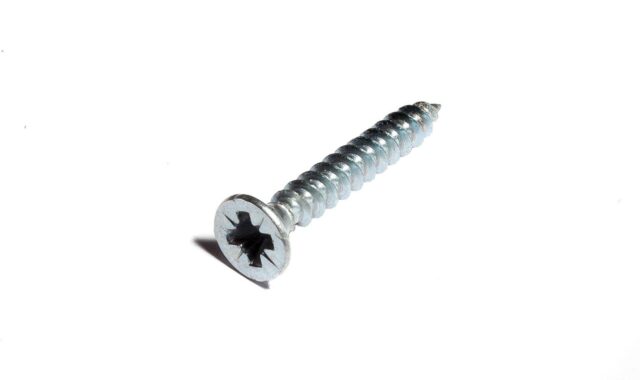
For face fastening, the 2022 guide recommended two screws per joist and stated that recommended screws should be installed flush with the decking surface, not countersunk. It also recommended stainless steel screws in areas near bodies of saltwater. When using pneumatic or battery-operated equipment, the guide advised adjusting pressure so the fastener head sits flush with the board cap rather than being driven through the shell.
The 2022 fastener list included Trex Hideaway Universal Hidden Fasteners and TigerClaw TC-G hidden fasteners for Transcend, Enhance, and Select decking. It also noted that plug-based hidden fasteners should not be used with Trex Enhance profiles with scalloped bottoms. All Trex decking products in the 2022 guide were approved for use with Trex Hideaway hidden fasteners, and square-edge profiles could be routed according to the instructions.
Fascia received a meaningful update in the 2022 edition. Two installation approaches were described: fascia under decking edges or ends, and fascia beside decking with spacers. For the beside-decking method, the guide called for exterior-grade spacers 3/16 in. to 1/4 in. thick, at least 1 in. wide, cut to rim-joist length, and spaced 9 in. on center. Fascia around the deck perimeter had to follow the same gapping requirements as decking to allow expansion and contraction. See also: BUILDING MATERIALS.
When using full-size 1 x 12 fascia on a 2 x 8 or larger rim joist, the 2022 guide required three screws: one 1 in. from the top, one at the center, and one 1 in. from the bottom. It also separated fascia products from deck boards used as fascia. If deck boards were used for fascia, the guide called for two Trex-recommended composite decking screws every 12 in. and a weather-resistant construction-grade adhesive as a secondary fastener. It also stated that fascia-approved fasteners could not be used in that deck-board-as-fascia application.
Special applications that need extra attention
Stairs, rooftop decks, sleeper systems, docks, and decks near reflective windows have requirements that are easy to miss if someone only reads the basic board-installation pages.
For stairs, the 2022 guide said Trex stair treads should be fastened continuously across at least four stringers. It also referenced common model-code dimensions, including stairways at least 36 in. wide and treads at least 11 in. deep, while reminding readers that local rules can require more. Gapping between Trex boards on stair treads was listed at 1/4 in. to 3/8 in., and stair tread overhang was not to exceed 3/4 in. The maximum stair stringer spacing was 12 in. on center for Transcend 1 x 6, 9 in. on center for Select and Enhance 1 x 6 scalloped-bottom profiles, and 12 in. on center for Transcend and Select 2 x 6.
For rooftop and sleeper systems, the 2022 guide warned that the system should not float; it must be secured. Sleepers should be level, decking should be supported below its full length, and roof applications should allow water to flow with the roof pitch. Where small debris could accumulate, the guide allowed a minimum 1-1/2 in. sleeper height but recommended 3-1/2 in. or greater in areas with debris buildup so material could be removed and airflow maintained.
For docks, the 2022 guide recommended a 3/8 in. width-to-width gap for increased drainage and stainless steel fasteners. It also discussed grounding where a dock has sufficient contact with gasoline. Near Low-E windows, the guide warned that reflected sunlight can concentrate heat on decking and railing, potentially causing charring or bowing. That is a site-condition issue, not a board layout issue, so it should be considered during design.
How to use a 2022 guide for a project today
If you are inspecting an older deck, the 2022 guide can be a useful benchmark. It helps identify whether board ends were supported, whether fasteners were installed at every joist where required, whether fascia had appropriate gapping, and whether stair stringers appear close enough for the profile used. It can also help a homeowner ask better questions when an installer says a visible gap, screw pattern, or fascia detail is normal.
If you are building now, use a different workflow. First, identify the exact Trex product line and profile being installed. Second, check the latest official installation guide and any applicable code evaluation report. Third, confirm local permit and inspection requirements. Fourth, match fasteners, plugs, hidden clips, fascia screws, and routing methods to that current document. Public Trex literature checked on September 11, 2026 showed a 2026 Trex Decking Installation Guide with 44 pages and stated updates including a 1 x 4 Transcend Lineage profile, updated decking and fastener SKUs, added U.S. span and gapping requirements, and an updated color palette.
The 2022 guide is not obsolete for understanding 2022-era instructions, but it is not enough for a current permit, warranty-sensitive installation, or product substitution decision.
Quick field checklist
- Confirm the exact Trex collection and profile before using any span, fastener, or fascia table.
- Use current manufacturer instructions for new work, especially if the guide in hand is from 2022.
- Verify local code, permit, guardrail, stair, and load requirements before framing.
- Keep 1 in. board and 0.875 in. Select decking at the correct joist spacing for the load category.
- Reduce joist spacing for angled decking patterns according to the manufacturer table.
- Plan end gaps, abutting gaps, width gaps, drainage, airflow, and board-end support before cutting boards.
- Use recommended or approved fasteners and keep face screws flush, not countersunk.
- Treat fascia as a movement-sensitive part of the deck, not as decorative trim that can be fastened anywhere.
- Review stairs, docks, rooftop decks, sleeper systems, and Low-E window exposure as special conditions.
Source note: Measurements and edition changes summarized here are based on Trex’s 2022 Decking Installation Guide, Trex’s public owner literature listing, and the 2026 Trex Decking Installation Guide checked on September 11, 2026.
Frequently asked questions
Can I use the Trex installation guide 2022 for a new deck?
Use it for background, but do not rely on it as the only instruction set for a new deck. Trex has published newer installation literature, and local inspectors may expect current manufacturer instructions and current code compliance.
What joist spacing did the 2022 guide list for standard Trex decking?
For 1 in. boards and 0.875 in. Select boards, the 2022 span chart listed 16 in. on center for 100 psf residential and commercial applications, and 12 in. on center for 200 psf commercial applications. Angled layouts require reduced spacing.
What gap should be left between Trex boards?
In the 2022 guide, width-to-width gapping had a minimum of 3/16 in. for normal hot or cold installations. Docks and heavily wooded areas were recommended at 3/8 in. End-to-end gaps varied by installation temperature.
Are hidden fasteners required?
Hidden fasteners are not the only fastening method for every application, but when they are used, the 2022 guide required them at every joist in the relevant hidden-fastener instructions. Face-fastened boards still had to use recommended screws and the required screw pattern.
What is the biggest risk of using the wrong fastener?
The risks include poor holding, surface damage, visible mushrooming, movement issues, and warranty problems. The 2022 guide specifically stated that conditions attributable to non-recommended fasteners were not covered under the Trex Limited Warranty.