Stone wall finishes for interior rooms with texture, durability, and practical maintenance
How to choose stone wall finishes for interior spaces
Stone wall finishes for interior rooms should be selected in a clear sequence: room conditions, wall structure, installation method, stone type, surface texture, and maintenance. A finish that looks ideal on a sample board may be the wrong choice for a damp basement, a sunny stairwell, a fireplace surround, or a high-touch hospitality wall. ASTM’s current C1528/C1528M-26 guide treats natural stone as one part of a building assembly, while the 2026 TCNA Handbook addresses stone tile installation details such as wet areas, substrate flatness, grout joints, and workmanship standards. (store.astm.org) For more surface planning ideas, see our interior finishes coverage.
The practical takeaway is straightforward: use real stone where depth, variation, longevity, and tactile value matter; consider thinner formats or stone-look alternatives where weight, repeatability, or easier wet-area detailing are higher priorities. Interior stone is a finish, but it performs as part of the wall system.
Main types of interior stone wall finishes
Most interior stone wall finishes fall into five useful categories. Each can be attractive, but each addresses a different design and construction requirement.
Natural stone veneer
Natural stone veneer uses cut stone pieces applied as a facing over a prepared wall. It is common for feature walls, fireplace surrounds, wine rooms, entry areas, and restaurant interiors because it delivers real mineral variation without the need to build a full structural stone wall. The key variables are thickness, weight, corner treatment, bonding method, and whether the wall needs mechanical support in addition to mortar or adhesive.
Stone tile and stone slab
Marble, limestone, travertine, slate, quartzite, and granite can be fabricated as tile or slab for interior walls. Tile is usually easier to handle and can follow familiar setting methods. Slab creates fewer joints and a more monolithic look, but it requires tighter planning for substrate tolerance, anchoring, access, seams, and future replacement. In bathrooms and kitchens, the stone’s porosity and acid sensitivity matter as much as color.
Stacked ledgestone and split-face stone
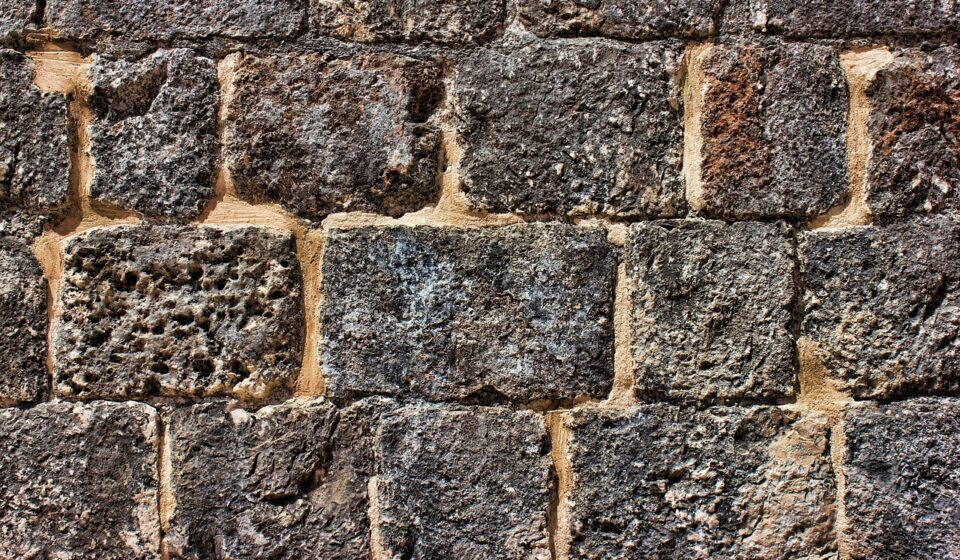
Stacked ledgestone and split-face stone are specified for shadow, depth, and a hand-built appearance. They work well on accent walls where light can graze the surface. Their main limitation is cleanability: deep texture collects dust more readily than honed or polished stone. In narrow corridors, behind dining banquettes, or near cooking zones, a heavily textured wall may age faster than expected unless cleaning access is considered from the start.
Manufactured stone and stone-look porcelain
Manufactured stone veneer and stone-look porcelain are not the same as natural stone, but they often enter the same specification discussion. They can be useful when consistent color, lower weight, easier sourcing, or tighter format control is more important than geological authenticity. Porcelain panels are especially relevant in wet rooms because they can provide a stone effect with a dense, engineered surface, although the installation still needs proper movement accommodation and waterproofing where required.
Existing masonry, limewash, and breathable coatings
Older homes, lofts, and adaptive-reuse projects may already have stone or masonry walls behind plaster or paneling. In those situations, the finish decision may involve cleaning, repointing, limewashing, or applying a compatible breathable treatment rather than adding new stone. The safest approach is to identify moisture sources and mortar type before sealing or coating an old wall. A finish that traps moisture can turn a character wall into a maintenance problem.
Performance factors that matter more than the sample
A stone wall sample mainly shows color and texture. It does not show wall movement, moisture exposure, substrate strength, lighting conditions, or cleaning difficulty. Those hidden conditions often determine whether the finish keeps its appearance over time.
Substrate and movement
Stone tile and veneer are rigid finishes, so they do not tolerate uncontrolled wall movement well. The Tile Council of North America explains that movement joints are needed because tile is a facing material and stresses can develop between the tile and substrate due to different rates of expansion and contraction. TCNA also notes that interior installations may need movement joints more frequently where moisture or direct sunlight is expected. (tcnatile.com) This is especially relevant for sunlit atriums, tall stair walls, bathrooms, and walls that cross structural transitions.
Moisture and indoor air
Moisture is one of the most important risks for interior stone finishes. The U.S. Environmental Protection Agency states that mold control depends on moisture control and warns that mold can be hidden behind wall coverings, paneling, and inside wall cavities when water problems are not addressed. (epa.gov) For stone walls, this means the design should address leaks, condensation, capillary moisture, and ventilation before the decorative finish is installed.
Weight and attachment
Weight affects everything from framing to adhesive choice. Thin stone tile may be suitable for many interior partitions when the substrate is properly prepared. Thicker veneer, dimensional pieces, and large slabs may require engineered attachment, stronger backing, or mechanical anchoring. A stone supplier’s recommendation should not replace a review of the wall assembly, especially on tall commercial walls, elevator lobbies, or fireplace features.
Finish options and design effects
The word finish can refer to both the material format and the surface treatment. A polished marble slab, honed limestone tile, brushed travertine panel, and split-face quartzite veneer all read differently under the same light. The table below summarizes practical differences that often matter during specification.
| Finish type | Visual effect | Best interior uses | Main limitation |
|---|---|---|---|
| Honed stone | Soft matte surface with reduced glare | Living rooms, bathrooms, fireplace walls, hotel rooms | Can show oils or fingerprints on some stones |
| Polished stone | Reflective, formal, color-rich appearance | Feature walls, powder rooms, reception areas | Shows scratches, etching, and uneven lighting more clearly |
| Split-face stone | Strong shadow, rugged texture, natural variation | Accent walls, stair walls, rustic or hospitality interiors | Harder to dust and unsuitable for some high-touch areas |
| Tumbled stone | Softened edges and aged character | Mediterranean, farmhouse, and transitional interiors | More grout lines and surface variation to maintain |
| Large-format slab | Continuous pattern with minimal joints | Luxury bathrooms, fireplaces, lobbies, TV walls | Requires careful handling, support, seam planning, and access |
Lighting should be planned with the stone, not added after selection. Grazing light emphasizes texture and can make a ledgestone wall look dramatic. The same lighting can also reveal lippage, uneven substrate preparation, or repetitive manufactured patterns. Diffused wall washing is usually more forgiving on honed slabs and smoother tile.
Where each stone wall finish works best
Feature walls in living rooms and bedrooms can use almost any stone finish if weight and substrate conditions are managed. In these spaces, the main design decision is whether the wall should act as a quiet backdrop or as the focal point. Honed limestone, light travertine, and subtle marble create calmer surfaces; slate, quartzite, and split-face formats create stronger texture.
Fireplace surrounds need a more cautious approach. Stone itself can tolerate heat better than many decorative finishes, but every fireplace or stove installation has its own appliance instructions, clearances, substrate requirements, and local code obligations. ASTM’s dimension stone selection guidance explicitly points to applicable building codes and compatible related assemblies, which is why fireplace stone should be specified as part of the whole wall and heat-producing system rather than as a decorative panel alone. (store.astm.org) See also: BUILDING MATERIALS.
Bathrooms and spa areas require moisture-first planning. Stone can be used successfully, but porous stone, textured grout lines, and poorly detailed corners can increase maintenance. In wet areas, the waterproofing layer, movement accommodation, slope where relevant, and cleaning routine matter more than the stone name. Dense stone-look porcelain may be a practical alternative when the design calls for marble or limestone aesthetics with less concern about acid sensitivity.
Basements and below-grade rooms deserve extra review before any stone is installed. Efflorescence, musty odor, condensation, or staining are warning signs that the wall is managing moisture. Covering that condition with veneer may hide the symptom without solving the source. In older masonry basements, a breathable restoration strategy may be more appropriate than a hard, sealed decorative face.
Maintenance, cleaning, and safety considerations
Stone maintenance depends on geology. The Natural Stone Institute explains that calcareous stones, such as marble and limestone, are sensitive to acidic solutions, while many siliceous stones are generally more acid resistant but can still contain acid-sensitive minerals. It recommends neutral cleaners, stone soap, or mild dishwashing detergent with warm water for many stone surfaces, and it notes that impregnating products act as repellents rather than making stone stain-proof. (naturalstoneinstitute.org)
For interior walls, that guidance translates into four practical rules. First, avoid vinegar, lemon-based cleaners, abrasive powders, and harsh bathroom descalers unless the product is specifically approved for that stone. Second, test cleaners and sealers in an inconspicuous area before broad use. Third, expect textured stone to need dusting with a soft brush or vacuum attachment. Fourth, do not assume sealing eliminates maintenance; it only changes how quickly liquids may absorb into some stones.
Installation safety also matters, even though it is often invisible in finished photography. OSHA states that respirable crystalline silica can be created when cutting, sawing, grinding, drilling, or crushing stone, rock, concrete, brick, block, and mortar. OSHA’s construction guidance says applying water to saw blades when cutting crystalline-silica-containing materials substantially reduces dust during those operations. (osha.gov) For occupied-home renovations, dust control, containment, ventilation, and cleanup should be included in the installation plan, not treated as an afterthought.
A practical specification checklist
Before approving an interior stone wall finish, confirm these points:
- Room conditions: Is the wall exposed to moisture, steam, direct sun, heat, impact, or frequent touching?
- Substrate: Is the wall flat, strong, dry, clean, and compatible with the selected setting system?
- Weight: Does the selected stone require special backing, fasteners, anchors, or structural review?
- Movement: Are perimeter gaps, changes of plane, and movement joints planned rather than hidden by hope?
- Stone behavior: Is the stone calcareous or siliceous, porous or dense, textured or smooth?
- Maintenance: Can the owner realistically clean the selected surface and grout profile?
- Safety: Will cutting and grinding be controlled to reduce dust, especially in occupied spaces?
- Replacement: Can a damaged piece be repaired or replaced without dismantling the entire wall?
The best stone wall finishes are not only decorative. They are coordinated interior finish systems that match the room, the wall assembly, and the people who will maintain them. When those details align, stone can add depth, permanence, and natural variation that painted drywall, wallpaper, and flat panels rarely provide.
Frequently asked questions
What is the best stone finish for an interior accent wall?
There is no single best option. Honed stone tile is a versatile choice when a calm, cleanable surface is the goal. Split-face or ledgestone works better when texture and shadow are central to the design. Large slab is strongest when the budget, wall support, and installation access allow a more seamless statement.
Can natural stone be used on bathroom walls?
Yes, but bathroom use requires moisture-aware detailing. The waterproofing system, grout, movement joints, ventilation, cleaner selection, and stone porosity all matter. Marble and limestone can be beautiful in bathrooms, but they are more sensitive to acidic cleaners than many homeowners expect.
Does interior stone always need sealing?
No. Some stones and locations may not require sealing, while others benefit from an impregnating repellent. Sealing should be based on stone type, porosity, exposure, and manufacturer guidance. It should not be treated as a cure for staining, etching, moisture problems, or poor installation.
Are stone-look porcelain panels a good alternative?
They can be. Stone-look porcelain is not natural stone, but it may be a practical alternative for wet rooms, lightweight remodeling, consistent color matching, and lower-maintenance surfaces. The tradeoff is that it lacks the geological variation and depth of real stone.
What is the biggest mistake with interior stone walls?
The most common mistake is choosing by appearance alone. Stone walls need compatible substrates, movement planning, moisture control, safe cutting practices, and realistic maintenance. If those factors are ignored, even an expensive stone can perform poorly.