Epoxy floor cleaning without dulling the finish for CARE & MAINTENANCE Buyers
What epoxy floor cleaning needs to do first
Epoxy floor cleaning should remove abrasive grit, spills, tire soil, grease, and detergent residue without damaging the coating that gives the floor its gloss and chemical resistance. For most residential garages, basements, workshops, and light commercial areas, the safest routine is straightforward: sweep or dust-mop first, wash with a properly diluted neutral pH cleaner, agitate the surface lightly, remove the dirty solution, rinse with clean water, and let the floor dry. The problems that most often dull epoxy are not caused by weak cleaners. They come from using too much cleaner, skipping the rinse, dragging grit under a mop, or scrubbing with aggressive pads.
Epoxy is durable, but it is still a finished surface. Cleaning should match the floor texture, soil level, and use of the space. A smooth garage floor can often be maintained with a microfiber mop and occasional deeper washing. A textured, anti-slip, or broadcast-chip surface usually needs a soft to medium bristle brush or a floor scrubber because a flat mop cannot reach into the profile. For more practical surface-care guides, see the Care & Maintenance section.
Why epoxy floors look dull after cleaning
When an epoxy floor loses shine after washing, the coating is not always damaged. In many cases, the dull look is a thin film left by dirty water, hard-water minerals, detergent residue, overused degreaser, or soil that was spread around instead of removed. Manufacturer maintenance guides for resinous flooring commonly follow the same sequence: sweep thoroughly, apply the cleaner at the correct dilution, allow limited dwell time, agitate, remove the cleaning solution, rinse, and remove the rinse water. The removal and rinse steps are easy to overlook, but they often separate a clean floor from a hazy one.
Abrasive dirt is another common cause. Sand, road grit, metal filings, and concrete dust can act like fine sandpaper when trapped under tires, toolboxes, furniture legs, or a mop head. Epoxy finishes are tough, but repeated abrasion can create micro-scratches that scatter light and reduce gloss. For that reason, dry soil removal is not just preparation. It is the first cleaning step.
Chemistry can also change the appearance. Neutral cleaners are preferred for routine maintenance because they reduce the risk of attacking the coating or leaving a sticky residue. Strong alkaline degreasers may be useful in some industrial or oily areas, but they should be selected carefully, diluted exactly as directed, tested in a small spot, and rinsed thoroughly. Acidic cleaners, solvent-heavy products, paint removers, undiluted bleach, steel wool, and aggressive stripping pads are poor choices for routine epoxy floor cleaning because they can dull, soften, stain, or scratch the finish.
The best routine for regular epoxy floor cleaning
A reliable routine does not need to be complicated. The goal is to remove loose debris before wet cleaning, then keep dirty detergent from drying on the floor.
- Clear the area. Move vehicles, rugs, storage bins, rolling chairs, and small equipment where practical. Check that wheels and furniture feet are clean so they do not drag grit back across the floor.
- Remove dry debris. Use a soft broom, dust mop, microfiber dusting pad, or floor sweeper. Pay attention to corners, expansion joints, door thresholds, and areas under shelving where grit collects.
- Choose the cleaner. Use a neutral pH floor cleaner for routine soil. Follow the label dilution. More concentrate does not mean better cleaning; it often means more residue.
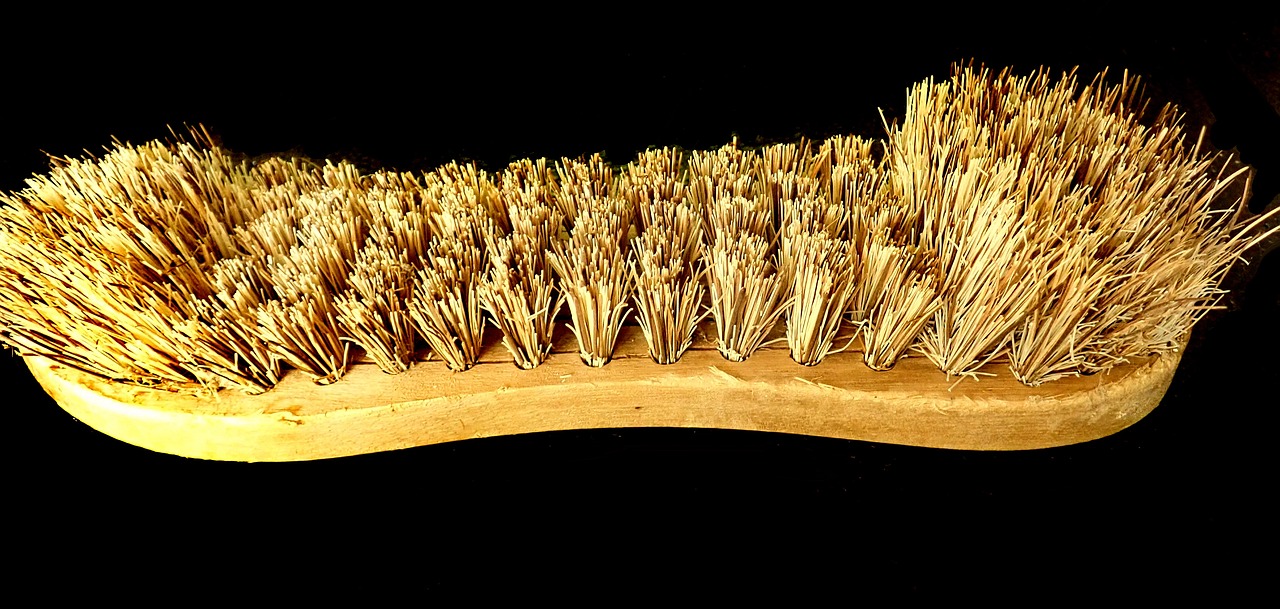
- Apply the solution. Use a microfiber mop on smooth floors. On textured floors, use a soft to medium bristle deck brush, a bristle attachment, or an automatic scrubber with a non-aggressive pad.
- Allow short dwell time. Let the cleaner work long enough to loosen soil, but do not let it dry on the surface. Maintenance sheets for resinous floors often use a short dwell window, such as 5 to 10 minutes, for appropriate cleaners.
- Agitate lightly. Scrub only as much as needed. Use overlapping passes rather than heavy pressure. Heavy pressure with the wrong pad can make the floor look worn even when the coating is structurally sound.
- Remove the dirty solution. Use a clean mop, wet vacuum, squeegee, or scrubber recovery tank. Do not simply push dirty water into another area.
- Rinse and dry. Rinse with clean water when the cleaner requires it or when residue is visible. Remove standing water and allow the surface to dry before traffic returns.
For a lightly used home garage, this full wet-cleaning routine may only be needed occasionally, while sweeping may be needed more often. In a workshop, entry area, commercial kitchen support space, or service bay, wet cleaning may be required weekly, daily, or after messy work. Frequency should follow the actual soil load rather than a fixed calendar.
Cleaning smooth, textured, and high-traffic epoxy floors
Not all epoxy floors clean the same way. The surface profile matters as much as the coating chemistry. Smooth floors release soil easily, but they can show streaks and residue. Textured floors hide soil better, but dirt settles in low spots and needs brush contact. High-traffic floors may need more frequent dry sweeping because grit is constantly being carried in.
| Floor condition | Best cleaning approach | What to avoid |
|---|---|---|
| Smooth garage or basement epoxy | Dust mop, then damp mop with diluted neutral cleaner; rinse if hazy | Over-wet mopping, soap buildup, abrasive pads |
| Textured or anti-slip epoxy | Sweep, scrub with soft to medium bristles, remove dirty water with wet vac or squeegee | Relying only on a flat mop, which may miss soil in the texture |
| Broadcast flake or quartz surface | Use brush agitation and thorough rinse recovery; repeat lightly rather than over-scrubbing | Wire brushes, black stripping pads, heavy grinding pressure |
| Workshop or service area | Clean spills quickly; use a compatible degreaser only when soil level requires it | Letting oil sit, using solvent mixtures without checking coating compatibility |
| ESD or conductive resinous flooring | Follow the flooring manufacturer’s maintenance sheet; avoid residue that can affect performance | Wax, mineral film, or strong cleaners unless approved for that system |
For workplaces, floor cleaning is also a safety issue. OSHA’s walking-working surface rules require covered workroom floors to be kept clean and, as far as feasible, dry. NIOSH slip-and-fall guidance also points to spills, greasy floors, and slippery cleaning products as hazards. For a homeowner, the same principle is practical rather than regulatory: remove spills quickly and do not leave a slick detergent film behind.
What to use and what to avoid
The safest product for routine epoxy floor cleaning is usually a neutral pH cleaner designed for finished floors or resinous floors. If the floor installer or coating manufacturer provided a maintenance sheet, follow that document first. Different systems may use different topcoats, slip additives, pigments, flakes, conductive fillers, or chemical-resistance requirements.
Good choices for routine cleaning
- Microfiber dust mop or soft broom for loose debris.
- Neutral pH cleaner diluted according to the product label.
- Microfiber wet mop for smooth residential floors.
- Soft or medium nylon bristle brush for textured areas.
- Wet vacuum, soft squeegee, or autoscrubber recovery system for larger floors.
- Clean rinse water when residue, haze, or detergent film is visible.
Use with caution
- Degreasers: Helpful for oily soil, but not always needed. Choose a product compatible with epoxy, dilute correctly, test first, and rinse well.
- Hot water: Warm water can improve cleaning, but high heat, pressure, and aggressive spray tips should stay within the coating manufacturer’s limits.
- Floor polish or wax: Some resinous floors can be refreshed with compatible polymer floor finish, but wax changes maintenance needs and can interfere with slip resistance or conductive flooring performance.
Avoid for normal maintenance
- Steel wool, wire brushes, razor scraping, or aggressive abrasive pads.
- Undiluted bleach, harsh acids, paint strippers, and solvent-heavy products.
- Methylene chloride products, which are associated with coating removal rather than routine cleaning.
- No-rinse cleaners if they leave a film on the floor.
- Dragging pallets, sharp metal edges, or heavy objects across the surface.
A cleaner can be chemically safe and still perform poorly if it is used too strong or not removed. If the floor feels tacky after washing, the usual issue is residue. Rinse with clean water, remove the rinse water, and let the floor dry. If the haze remains, test a small inconspicuous area with the cleaner recommended by the coating manufacturer before repeating the process across the full floor.
How to handle common spills and stains
Fast response is better than stronger chemistry. Many maintenance guides for epoxy and resinous floors advise cleaning spills promptly because prolonged contact can stain or damage some coatings, especially when the spill involves oils, chemicals, dyes, or automotive fluids.
| Problem | First response | If it remains |
|---|---|---|
| Dust, sand, and road grit | Sweep or dust mop before wet cleaning | Increase dry sweeping near entrances and garage doors |
| Tire marks | Clean with neutral cleaner and light agitation | Use a compatible degreaser or tire-mark remover after spot testing |
| Oil or grease | Blot or absorb first, then wash the area | Use an approved degreaser, agitate, remove solution, and rinse |
| Salt residue | Rinse with clean water and remove the rinse water | Repeat with neutral cleaner if film remains |
| Sticky cleaner film | Rinse thoroughly with clean water | Reduce cleaner concentration next time and avoid letting solution dry |
| Scratches or loss of gloss | Clean thoroughly to confirm it is not residue | Ask the installer whether buffing, polishing, or recoating is appropriate |
Do not mix cleaners in an attempt to solve a stubborn stain. Mixing chemicals can create safety risks, and residues from incompatible products may discolor or degrade a coating. If a spill involves a strong chemical, identify the substance, clean it promptly, and check the coating’s chemical-resistance guidance. In commercial settings, unusual chemical spills should be documented and inspected because damage may not be visible immediately.
A practical cleaning schedule
The right schedule depends on traffic, soil type, weather, and how the space is used. A garage used for parking in a snowy climate will collect salt and grit differently from a clean basement laundry room. A small workshop with sawdust needs more dry cleanup than a lightly used storage room. See also: BUILDING MATERIALS.
- After messy work or spills: Remove liquids, oils, powders, and abrasive debris immediately.
- Daily to weekly: Sweep or dust mop high-traffic areas, garage entrances, walk paths, and work zones.
- Weekly to monthly: Damp mop or scrub with neutral cleaner, depending on soil level.
- Seasonally: Deep clean after winter salt, pollen, construction dust, or heavy garage use.
- Annually: Inspect for worn traffic lanes, scratches, peeling, chemical stains, and areas where texture has changed.
For high-traffic commercial floors, a written maintenance plan is useful. It should identify the approved cleaner, dilution ratio, equipment, pad or brush type, rinse method, and inspection points. For a home garage, the same approach can be simplified: keep a neutral cleaner, microfiber mop, soft brush, and wet vacuum available, and clean before soil becomes embedded.
When cleaning is not enough
Cleaning can remove dirt, film, oil, and many surface marks, but it cannot reverse every type of wear. If the floor has deep scratches, flaking, peeling, blistering, chemical burns, or areas where the coating has worn through to concrete, the issue is not cleaning alone. Aggressive scrubbing may make the surface look worse.
Start with a gentle test clean in a small area. If gloss improves, the issue is likely residue or soil. If the cleaned area remains flat, rough, or scratched, the finish may be abraded. Some epoxy systems can be screened and recoated, but recoating usually requires proper surface preparation, compatibility checks, and the right resin system. Do not apply a random clear coat over a contaminated or glossy floor and expect long-term adhesion.
New epoxy also needs care. Avoid heavy cleaning until the coating has cured according to the installer’s guidance. Early exposure to water, chemicals, hot tires, or scrubbing can affect appearance and performance. Once the floor is in normal service, consistent mild cleaning is usually better than occasional harsh cleaning.
Frequently asked questions
Can I use vinegar to clean epoxy floors?
Vinegar is acidic, so it is not the first choice for routine epoxy floor cleaning. A neutral pH cleaner is safer for regular maintenance. If a manufacturer specifically allows an acidic cleaner for a certain residue, follow that guidance and rinse thoroughly.
Why does my epoxy floor feel sticky after mopping?
A sticky feel usually means too much cleaner was used, the cleaner was not rinsed, or dirty solution dried on the surface. Rinse with clean water, remove the rinse water, and use less cleaner next time.
Can I pressure wash an epoxy garage floor?
Some resinous floors tolerate controlled pressure washing, but pressure, heat, spray tip, and distance matter. Use a fan tip, keep the wand moving, avoid damaged edges, and follow the coating manufacturer’s limits. For most home garages, a mop, brush, hose rinse, squeegee, and wet vacuum are safer.
How often should epoxy floors be cleaned?
Clean based on soil load. Sweep grit as soon as it appears, clean spills immediately, and wet clean when the floor shows film, footprints, salt, grease, or tracked-in dirt. High-traffic or oily areas need more frequent maintenance than light residential spaces.
Will epoxy floors need wax?
Many epoxy floors do not need wax for normal use. A compatible polymer floor finish may restore gloss on some systems, but it adds a maintenance layer and may not be suitable for textured, slip-resistant, or conductive floors. Check the coating guidance before applying any finish.
The bottom line
Effective epoxy floor cleaning is a controlled process, not a search for the strongest chemical. Remove grit first, use a neutral cleaner at the right dilution, agitate according to the floor texture, remove dirty solution, rinse when needed, and keep spills from sitting on the coating. That routine protects appearance, reduces slip hazards, and helps the floor keep the durable finish that makes epoxy useful in garages, workshops, utility rooms, and light commercial spaces.