Natural wood interior design for warm, durable, and healthier spaces

Why natural wood interior design is more than a style choice
Natural wood interior design is the deliberate use of solid wood, veneer, engineered wood, and wood-look detailing to make interiors feel warmer, more tactile, and more connected to nature. The best results rarely come from covering every surface in timber. Wood is most effective where its grain, touch, acoustic softness, durability, and repairability add value: floors, wall paneling, ceilings, cabinetry, stairs, built-ins, furniture, and trim. For homeowners, designers, and builders, the key question is not whether wood looks attractive. It is how to choose the right wood product, finish, color balance, and sourcing documentation so the space feels natural without creating maintenance or indoor-air problems.
This matters because interiors are increasingly judged on comfort, material health, and long-term value, not appearance alone. WoodWorks discusses exposed wood as part of biophilic design, where natural elements such as daylight, plants, water, and wood help strengthen the connection between occupants and the natural environment. (woodworks.org) The International WELL Building Institute has also placed material health within broader interior design frameworks, including its October 14, 2026 introduction of a WELL Interiors designation focused on furniture specifications, materials, light, sound, and movement. (resources.wellcertified.com)
For more ideas across wall, ceiling, flooring, and surface materials, visit our interior finishes section.
Where wood makes the biggest impact indoors
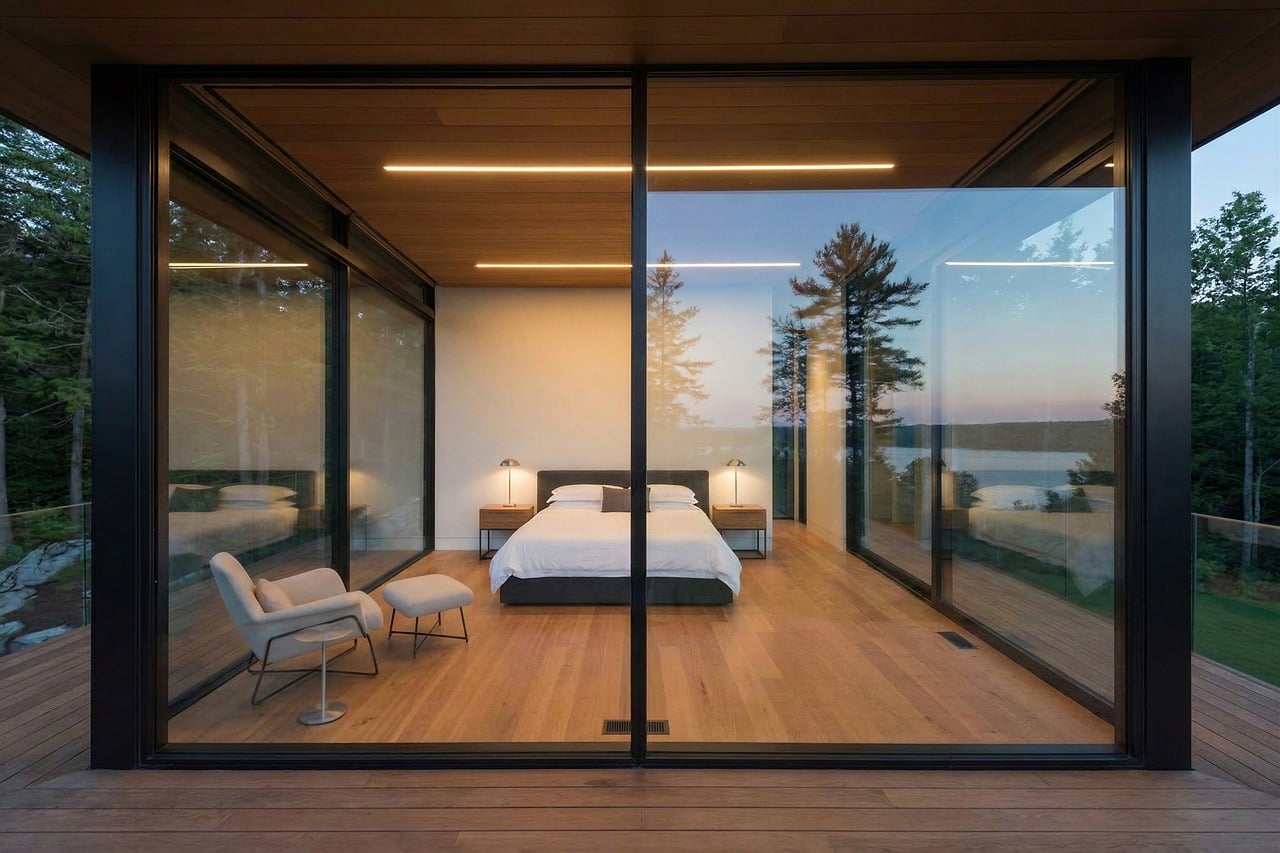
Wood has the most visual and practical value where people see it repeatedly or touch it often. In a living room, that may mean a white oak media wall, walnut shelving, or exposed ceiling beams. In a kitchen, it may be flat-panel veneer doors, a butcher-block accent, or timber stools that soften stone and metal. In a bedroom, a wood headboard wall can add warmth without the cost of full paneling. In offices and hospitality spaces, wood ceilings and feature walls can make large rooms feel more human-scaled.
The key is hierarchy. A room with wood flooring, wood paneling, wood ceiling boards, wood furniture, and wood trim can feel heavy unless the tones are carefully separated. A more flexible approach is to choose one dominant wood surface, one supporting wood element, and one smaller accent. For example, oak flooring can be the dominant element, painted cabinetry can provide a visual pause, and walnut pulls or stools can act as the accent. This keeps the room natural without making it visually flat.
| Interior area | Best wood applications | Design caution |
|---|---|---|
| Living room | Wall panels, shelving, beams, side tables | Avoid matching every furniture piece to the floor |
| Kitchen | Cabinet fronts, stools, open shelves, island details | Protect against water, grease, and heat exposure |
| Bedroom | Headboards, wardrobes, bedside furniture, ceiling accents | Use calming grain patterns rather than busy contrasts |
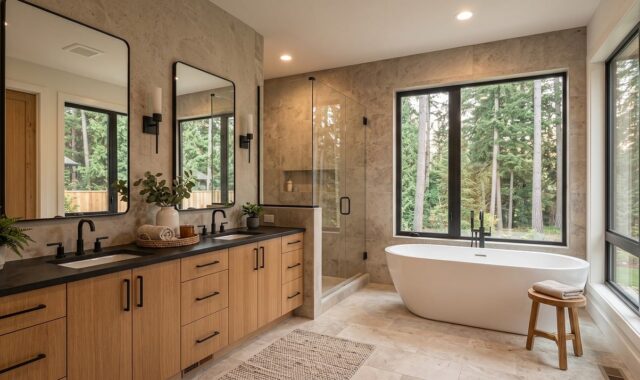
| Bathroom | Vanity fronts, slatted accents, mirror frames | Specify moisture-resistant construction and ventilation |
| Commercial interiors | Feature walls, ceilings, reception desks, acoustic elements | Confirm fire, durability, and maintenance requirements early |
Solid wood, veneer, and engineered panels are not interchangeable
A successful wood interior starts with product selection. Solid wood is valued for depth, edge detail, repairability, and natural variation. It is a strong choice for furniture, stair parts, trim, tabletops, and details that may be refinished over time. However, solid wood expands and contracts with humidity, so it is not always the best option for large flat cabinet doors or full-height wall panels.
Wood veneer uses a thin layer of real wood over a stable core. It is often the practical choice for cabinetry, wall paneling, and built-ins because it allows consistent grain matching while reducing movement across wide surfaces. Architectural panels can use MDF, particleboard, plywood, or other cores depending on performance, cost, weight, and finishing requirements. The Architectural Woodwork Institute’s ANSI/AWI 0642–2024 wood paneling standard identifies paneling materials such as solid wood and veneer-faced products, and notes that transparent-finish work should use solid wood or veneer. (awinet.org)
Engineered wood should not be treated as inferior by default. It can improve stability, reduce waste, and make large surfaces feasible. The important distinction is whether the product suits the location and whether emissions, edge details, substrate quality, and installation methods have been specified. For kitchens and built-ins, a high-quality veneer on a stable core may outperform a poorly designed solid-wood slab door.
How to build a natural wood color palette
Wood color should be planned alongside stone, tile, paint, metal, textiles, and lighting. Pale woods such as ash, maple, birch, and white oak can make compact interiors feel open and calm. Medium tones such as cherry, elm, teak, and warm oak create familiarity and work well with cream, clay, olive, charcoal, and muted blue. Dark woods such as walnut, smoked oak, and wenge create depth, but they need stronger lighting and lighter surrounding finishes to avoid making the room feel heavy.
Mixing wood tones is possible when there is a clear rule. One reliable method is to keep undertones consistent: warm woods with warm neutrals, cooler oaks with stone gray or soft white, and reddish woods with earthy greens or muted creams. Another method is contrast by role. The floor can be light oak, the furniture walnut, and the cabinetry painted, giving each material a clear purpose. Problems usually appear when two similar but not matching woods compete side by side.
Use grain scale as a design tool
Wood grain has scale. Rift-sawn and quarter-sawn oak often read more linear and architectural, while plain-sawn boards show wider cathedral patterns. Walnut and cherry can feel more furniture-like because of their figure and color variation. For minimal interiors, calmer grain helps the room feel edited. For rustic, traditional, or craft-focused interiors, stronger knots and wider grain movement can become part of the character.
Do not ignore lighting
Warm lighting can make oak and walnut appear richer, while cool lighting can make some woods look gray or dull. Before committing to a stain, finish, or veneer sequence, samples should be reviewed under the actual lighting conditions of the room. This is especially important in north-facing rooms, windowless corridors, and commercial interiors where LED color temperature strongly affects the final appearance.
Finish choices affect appearance, maintenance, and indoor air
The finish determines how wood feels and performs. Oil and hardwax-oil finishes often preserve a tactile, low-sheen surface and can be easier to spot-repair, but they may require periodic maintenance. Water-based polyurethane can provide strong protection with lower ambering than some oil-based coatings. Factory-finished flooring and prefinished panels can improve consistency and reduce on-site finishing time. Stains can help coordinate species, but heavy staining may hide the natural variation that made wood appealing in the first place.
Indoor air quality should be part of finish selection. The U.S. Environmental Protection Agency identifies paints, lacquers, paint strippers, cleaning supplies, building materials, furnishings, glues, and adhesives as possible sources of volatile organic compounds. (epa.gov) EPA guidance also emphasizes source control and ventilation when products that emit VOCs are used indoors, especially during remodeling. (epa.gov) For wood interiors, that means checking the coating, adhesive, composite core, and installation products rather than focusing only on the visible wood face.
Composite wood products need extra attention. EPA’s TSCA Title VI formaldehyde rule covers hardwood plywood, medium-density fiberboard, and particleboard sold, supplied, offered for sale, imported, or manufactured in the United States. (epa.gov) EPA guidance states that composite wood panels manufactured in or imported into the United States after March 22, 2019 must be TSCA Title VI compliant and labeled with required information. Separate EPA guidance notes that many laminated product producers became subject to applicable requirements beginning March 22, 2024 unless exempted. (epa.gov) See also: BUILDING MATERIALS.
Sourcing and sustainability claims need evidence
Natural wood interior design is often described as sustainable, but that claim depends on sourcing, manufacturing, transport, durability, and end-of-life planning. Wood can store biogenic carbon during its service life and can have favorable embodied-carbon characteristics compared with some alternative materials. However, project-specific claims should rely on life-cycle data, environmental product declarations, or comparable documentation rather than generic assumptions. WoodWorks recommends tools such as life-cycle assessment and environmental product declarations when evaluating wood’s environmental performance in buildings. (woodworks.org)
Certification can also help. The Forest Stewardship Council says FSC certification verifies that forest products are handled correctly at each stage of production and trade, supporting claims related to responsible forestry. (us.fsc.org) For U.S. hardwoods, the American Hardwood Export Council’s environmental profile program combines life-cycle assessment information with legality and sustainability data for specific consignments of American hardwood lumber and veneer. (americanhardwood.org) These tools do not automatically make every wood choice ideal, but they give specifiers and buyers a more reliable basis for comparison.
Durability is part of sustainability too. A solid table that can be repaired, a veneered panel system with replaceable sections, or flooring that can be refinished may have a longer useful life than a cheaper product replaced after a few years. In this sense, timeless detailing and realistic maintenance planning are environmental decisions as well as design decisions.
Common mistakes that make wood interiors feel dated
The first mistake is using one wood tone everywhere. Matching floors, cabinets, doors, trim, and furniture can make a space feel like a showroom rather than a layered interior. The second mistake is choosing a trendy stain without considering the architecture. Very gray floors, high-gloss orange finishes, or overly distressed surfaces can date quickly when they do not fit the building.
The third mistake is forgetting transitions. Wood flooring meeting wood stairs, a veneered wall meeting painted trim, or cabinetry meeting a stone countertop all require careful edge decisions. Shadow gaps, reveals, trim profiles, and grain direction can either make the project look intentional or expose cost-cutting.
The fourth mistake is using wood where moisture, heat, or impact will exceed its capacity. Bathrooms, mudrooms, rental units, restaurants, and high-traffic corridors can still use wood, but they need suitable species, protective finishes, ventilation, and realistic maintenance instructions. In some cases, wood-look tile, compact laminate, or another surface may be better for the wettest zone, while real wood is reserved for protected areas.
A practical specification checklist
Before approving a natural wood interior package, the design team or homeowner should answer the following questions:
- What is the role of the wood: dominant surface, supporting texture, or accent?
- Is the product solid wood, veneer, plywood, MDF, particleboard, or another engineered panel?
- Will humidity movement affect door size, panel joints, or installation tolerances?
- Does the finish match the expected wear, cleaning method, and sheen level?
- Are adhesives, coatings, and composite cores selected with indoor air quality in mind?
- Is there documentation for formaldehyde compliance where composite wood is used?
- Is responsible sourcing supported by certification, an environmental profile, or supplier documentation?
- Have samples been reviewed under the actual lighting of the project?
- Can damaged components be repaired, refinished, or replaced without rebuilding the whole room?
Frequently asked questions
Is natural wood interior design suitable for small spaces?
Yes, but restraint is important. In small rooms, use wood as a focused surface such as flooring, shelving, a headboard wall, or a vanity rather than covering every plane. Pale woods, vertical slats, and simple grain patterns can add warmth without visually shrinking the space.
What wood is best for a modern interior?
White oak, ash, maple, walnut, and birch are common choices for modern interiors because they can be detailed cleanly and finished with low-sheen coatings. The best choice depends on the desired tone, budget, hardness, availability, and whether the application is furniture, flooring, cabinetry, or paneling.
Can veneer look as good as solid wood?
Yes. High-quality veneer can look refined and consistent, especially on large cabinet fronts and wall panels. It also allows grain matching across broad surfaces. Solid wood remains valuable for edges, furniture, trim, and elements that may be refinished repeatedly.
How do I keep wood interiors from feeling too rustic?
Use cleaner profiles, calmer grain, simple hardware, and balanced contrast. Pair wood with plaster, stone, metal, glass, or painted surfaces. Avoid excessive knots, heavy distressing, and too many competing wood tones if the goal is a contemporary interior.
Are wood interiors automatically healthier?
No. Wood can support a warmer and more nature-connected interior, but health-related performance depends on the whole assembly: finish, adhesive, composite core, ventilation, cleaning products, and installation practices. Checking low-emitting products and formaldehyde compliance is more reliable than assuming all natural-looking materials are low-impact.