Sustainable interior wall finishes for healthier, lower-impact spaces

What makes an interior wall finish sustainable?
Sustainable interior wall finishes are materials and finish systems that reduce indoor pollutant exposure, lower life-cycle environmental impact, use resources responsibly, and last long enough to avoid unnecessary replacement. The key point for specifiers is that no single label, claim, or material name proves sustainability. A clay plaster with a high-impact sealer, a recycled panel installed with high-emitting adhesive, or a low-VOC paint that fails quickly can all underperform.
A more reliable approach is to assess the full wall assembly: substrate, primer, adhesive, finish coat, protective coating, maintenance cycle, and end-of-life route. EPA guidance on indoor air quality identifies paints, varnishes, waxes, adhesives, pressed wood, and similar building products as potential sources of VOCs, while CDPH Standard Method v1.2 is widely used for chamber testing of VOC emissions from indoor sources. (epa.gov)

The climate context also matters. The UNEP and GlobalABC 2024-2025 building report states that buildings accounted for 32% of global energy demand and 34% of global CO₂ emissions in 2023, with materials such as cement and steel responsible for a significant share of building-related CO₂. Interior wall finishes are only one part of that wider picture, but they are specified repeatedly across homes, offices, hotels, retail spaces, and renovation projects. Over time, routine specification choices add up. (wedocs.unep.org)
For more coverage of finish systems, coatings, panels, and material trends, see the interior finishes section.
The main options for sustainable interior wall finishes
Low-emitting paints and coatings
Paint remains the most common interior wall finish because it is affordable, familiar to contractors, easy to repair, and compatible with many substrates. A more sustainable paint specification should look beyond the front-label claim. Low-VOC or zero-VOC content is useful, but emissions testing, tint system chemistry, washability, coverage rate, durability, and leftover paint management all affect actual performance. EPA guidance on greener paints and coatings lists considerations such as reducing toxic ingredients and VOCs, recycled content, salvaged excess paint, alternative paints, durability, and take-back or recycling options. (epa.gov)
Paint is often the practical choice where walls need frequent color updates, such as multifamily corridors, rental housing, schools, hospitality back-of-house areas, and retail spaces. The main sustainability risk is a short repaint cycle. A washable, repairable coating that lasts eight years may be preferable to a more specialized finish that is damaged after two years and requires full replacement.
Clay, lime, and mineral-based plasters
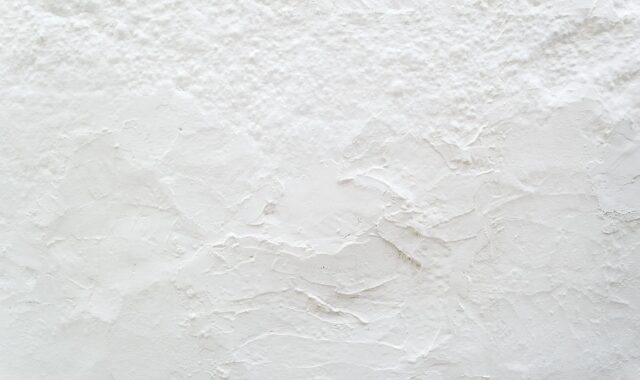
Clay and lime plasters appeal to designers because they can create depth, texture, and a quieter visual character than flat paint. Depending on the formulation, they may also reduce reliance on synthetic resins. They are not automatically low-impact, however. Binder type, aggregate source, pigment, sealer, transport distance, and installer waste all matter.
Mineral finishes can be strong options for residential feature walls, boutique hospitality, wellness interiors, and projects that call for a natural surface language. They need careful detailing around corners, wet zones, and high-abuse areas. Specifiers should also ask whether the plaster system requires a primer, bonding agent, acrylic additive, wax, or topcoat. Those components can change emissions, repairability, vapor behavior, and maintenance. The strongest sustainability case is usually a complete system with clear technical data, low-emission documentation where available, and a realistic maintenance plan.
Reclaimed or certified wood wall panels
Wood wall cladding can bring biophilic warmth and long service life, especially when panels can be mechanically fastened, removed, refinished, or reused. Reclaimed wood can avoid new harvesting and add character, but it should be checked for contaminants, old coatings, moisture content, pests, and fire performance. For new wood, FSC chain of custody certification is one way to verify that forest-based materials are tracked through the supply chain from certified source to finished product. (fsc.org)
The hidden sustainability issue with wood panel walls is often the backing or finish. Composite cores, stain systems, fire retardants, adhesives, and acoustic layers may dominate the health and documentation profile. A responsible specification should state the wood source, panel construction, finish chemistry, fire rating, installation method, and whether panels can be demounted without destroying the wall.
Recycled-content and rapidly renewable panels
Panels made with recycled fiber, agricultural residues, cork, felt, cellulose, or other bio-based ingredients can reduce demand for virgin materials and add acoustic performance. They are well suited to offices, classrooms, conference rooms, and hospitality interiors where sound absorption is part of the brief. Recycled or bio-based content is still only one attribute. The product may contain binders, dyes, water repellents, antimicrobial treatments, or laminated surfaces that affect emissions and recyclability.
Ask for product-specific documentation rather than relying on broad terms such as eco, natural, green, or sustainable. If the finish is intended for acoustic use, verify noise reduction data alongside emissions documentation and cleanability. If circularity is part of the claim, confirm whether the manufacturer offers a take-back program or whether local recycling infrastructure can actually process the material.
Repairing and refinishing existing walls
The lowest-impact wall finish may be the wall that is already in place. EPA sustainable materials management guidance emphasizes looking across a product life cycle and identifies source reduction measures such as preserving existing buildings, designing for adaptability, using methods that allow disassembly, and reducing interior finishes. For renovations, cleaning, patching, skim coating, repainting, or selectively adding finish panels can reduce demolition waste and demand for new material. (epa.gov)
This does not mean every existing surface should be kept. Water damage, mold, lead paint, asbestos-containing materials, failing substrates, and fire-code problems require professional assessment. Where the substrate is safe and sound, however, retaining it is often the first sustainability question to ask before choosing a new decorative layer.
Compare finishes by performance, not by marketing claims
| Finish route | Where it works best | Sustainability strength | Key caution |
|---|---|---|---|
| Low-emitting paint | Most residential and commercial walls | Low cost, easy repair, familiar labor, broad documentation options | Short repaint cycles can offset benefits |
| Clay or lime plaster | Feature walls, hospitality, wellness interiors, residential spaces | Durable texture, mineral or earth-based aesthetics, fewer layered finishes when detailed well | Installer skill, sealers, moisture exposure, and cracking must be managed |
| Certified or reclaimed wood panels | Accent walls, lobbies, offices, restaurants, residential interiors | Repairable, warm, potentially reusable, traceable sourcing when certified | Fire rating, coatings, composite cores, and adhesives can be limiting factors |
| Recycled-content acoustic panels | Offices, classrooms, meeting rooms, hospitality corridors | Can combine finish and acoustic function in one layer | Binder chemistry, cleanability, and end-of-life route require review |
| Wallpaper or wallcovering | Hospitality, retail, decorative residential walls | Long wear life in the right setting, strong design impact with limited area | Vinyl content, adhesive emissions, removal waste, and moisture trapping can be concerns |
The practical lesson is to compare the installed system, not just the face material. A wallcovering that lasts 15 years in a hotel corridor may outperform a fragile natural finish that needs frequent replacement. Conversely, a durable and attractive material may be a poor choice if it requires solvent-based adhesives in an occupied renovation with limited ventilation. See also: BUILDING MATERIALS.
Documentation to request before specifying
For professional projects, documentation is often what separates a credible sustainable finish from an unsupported claim. Environmental Product Declarations report life-cycle assessment results using program rules; the ISO catalog lists ISO 14025:2026 as the standard specifying principles and requirements for EPD programs, and UL explains that product category rules define how LCAs are created and reported for comparable product types. (iso.org)
Material health documentation is separate, but closely related. The HPD Collaborative identifies HPDs as a standardized way to report product content and associated health information, with HPD Open Standard v3.0 current as of September 2025. USGBC materials guidance recognizes tools such as EPDs and Health Product Declarations within LEED material transparency pathways. Declare labels can add ingredient transparency, but ILFI terms also make clear that a Declare label is not a blanket claim that a product is generally sustainable, healthy, or superior. (hpd-collaborative.org)
A strong submittal package for sustainable interior wall finishes may include:
- VOC emissions testing, preferably for the finished product or full system, not only wet-applied VOC content.
- EPD or life-cycle data when comparing products with similar functions.
- HPD, Declare label, or ingredient disclosure where material health is a priority.
- FSC, reclaimed-content, recycled-content, or other sourcing documentation when relevant.
- Fire rating, cleanability, abrasion resistance, moisture limits, and maintenance instructions.
- Installation method, adhesive requirements, primer requirements, and ventilation instructions.
- End-of-life information, including whether the finish can be repaired, removed, reused, recycled, or safely disposed of.
A practical specification checklist
Before selecting a wall finish, define the project need in plain terms. A bedroom accent wall, a hospital waiting area, a restaurant restroom, and a school corridor should not use the same sustainability priorities. The most useful checklist starts with use conditions, then moves to environmental claims.
- Start with durability. Estimate traffic, cleaning frequency, impact risk, UV exposure, moisture, and expected design life.
- Reduce layers where possible. A finish that serves as color, texture, protection, and acoustic treatment may reduce material compared with multiple separate layers.
- Prefer repairable surfaces. Local patching, repainting, refinishing, or panel replacement can extend service life.
- Check emissions for the whole assembly. Include primer, adhesive, sealant, coating, backing board, and edge treatment.
- Use transparent sourcing. Ask for chain of custody, recycled-content verification, or reclaimed-material records where those claims drive the selection.
- Plan installation around occupancy. Even low-emitting products benefit from ventilation, curing time, and proper storage.
- Design for future change. Mechanical fasteners, modular panels, and standard dimensions can make reuse and replacement easier.
Common trade-offs and limits
Sustainable specification is usually a balancing exercise. Low-emitting products may cost more upfront, but poor durability can be more expensive over time. Natural finishes can reduce synthetic content, yet may need specialist labor or protective coatings. Recycled-content products can reduce virgin material demand, but some are difficult to recycle again. A premium wallcovering can reduce repainting in high-traffic areas, while adhesives and removal waste still need to be considered.
Moisture and code compliance are non-negotiable. In bathrooms, spas, healthcare spaces, commercial kitchens, and exterior-adjacent walls, the finish must match the moisture risk and cleaning protocol. Fire performance is equally important for wood, fabric, felt, cork, acoustic panels, and some bio-based products. Sustainability should never be used to justify a finish that fails code, traps moisture, or cannot be cleaned for the intended occupancy.
Availability is another real constraint. Some lower-impact finishes require longer lead times, trained installers, or limited color ranges. On fast-track projects, a well-documented low-emitting paint may be more reliable than an unusual finish with uncertain sourcing. The best sustainable choice is often the one the project team can install correctly, maintain realistically, and document honestly.
Frequently asked questions
Are low-VOC paints always sustainable?
No. Low-VOC content is only one attribute. A paint should also be assessed for emissions, durability, coverage, tint system, cleanability, packaging, leftover management, and how often it must be reapplied. A durable low-emitting paint is usually more sustainable than a weak coating that needs frequent repainting.
Is clay plaster better than paint?
It depends on the project. Clay plaster can offer a distinctive natural texture and may reduce reliance on synthetic surface layers, but it needs the right substrate, installer skill, detailing, and maintenance expectations. Paint may be more sustainable in high-turnover spaces where fast repair and low waste are priorities.
What is the most sustainable wall finish for a renovation?
Often, the first option to evaluate is repairing and refinishing the existing wall. If the substrate is safe and sound, retaining it can reduce demolition, hauling, and new material demand. If new material is needed, select the least complex system that meets durability, health, code, and design requirements.
Can sustainable wall finishes contribute to LEED or WELL goals?
They can support project goals when documentation aligns with the rating system requirements, such as low-emitting material documentation, EPDs, ingredient reporting, or responsible sourcing. Credit achievement is project-specific, so the design team should confirm the applicable rating version and documentation rules before procurement.
How can homeowners verify sustainability claims?
Homeowners can ask for a product data sheet, emissions certification, ingredient disclosure, recycled or certified sourcing information, and maintenance instructions. If the supplier cannot explain what makes the finish lower impact, treat the claim as marketing rather than evidence.