Types of finishes in interior design and where each works best

What interior finishes include
The main types of finishes in interior design are the visible surface treatments applied to walls, floors, ceilings, built-ins, doors, furniture and architectural details. They include paint, plaster, wallpaper, wood veneer, laminate, tile, stone, concrete, metal, glass, carpet, textiles, acoustic panels and specialty coatings.
A finish should not be selected by appearance alone. It needs to suit the substrate, traffic level, cleaning routine, moisture exposure, indoor air quality goals and budget. Porcelain tile, for example, may be appropriate for a wet bathroom floor, while lime plaster may be chosen for a softer wall texture in a dry living space. This guide compares finish categories by use, performance and limitations so designers, homeowners and builders can make clearer material decisions.
For more material-focused articles, visit the INTERIOR FINISHES section.
Main types of finishes in interior design
Interior finishes can be grouped by the surface they cover, the material they are made from and the way they perform after installation. These categories often overlap. A wood panel may have a stain, lacquer or fire-rated coating. A concrete floor may be polished, sealed or covered with a resin finish. Understanding both the base material and the final surface layer helps avoid vague specifications.
Paints and architectural coatings
Paint is one of the most common wall and ceiling finishes because it is cost-efficient, flexible in color and relatively easy to refresh. Common options include matte, eggshell, satin, semi-gloss and gloss finishes. Matte paint can hide minor wall imperfections, but it is usually less scrub-resistant than higher-sheen coatings. Satin and semi-gloss finishes are often used in kitchens, bathrooms, doors, trims and commercial areas where cleaning is a priority.
Paint selection should cover more than color. Designers should check substrate preparation, primer compatibility, sheen, washability, VOC content and drying conditions. The U.S. Environmental Protection Agency identifies paints, solvents and building materials as potential sources of volatile organic compounds, so ventilation and product selection are part of responsible specification.
Plaster and decorative wall systems
Plaster finishes create depth and texture that flat paint cannot easily match. Gypsum plaster, lime plaster, Venetian plaster, clay plaster and microcement-style wall systems are used for smooth, troweled, mineral or handmade effects. Lime and clay plasters can support a natural aesthetic, while polished plaster can create a stone-like appearance on feature walls.
The main limitation is workmanship. A poor plaster installation is difficult to hide, and repairs may remain visible. Decorative plaster also requires a compatible substrate, controlled drying and careful protection during construction. It is best specified with sample boards reviewed under the actual project lighting.
Wallcoverings and panels
Wallcoverings include paper wallpaper, vinyl wallcovering, fabric-backed products, grasscloth, murals and digital prints. Panels include wood slats, MDF panels, laminate-faced boards, acoustic panels, leather-look panels and mineral or gypsum-based wall boards. These finishes can add pattern, tactility and acoustic control.
Vinyl wallcovering is durable and cleanable, which can be useful in hospitality and commercial corridors, but it may not be suitable for every moisture condition. Natural grasscloth offers texture but can be sensitive to staining and color variation. Panel systems can hide services and improve acoustics, yet they also introduce joints, trims, fire performance questions and maintenance requirements.
Wood, veneer and engineered timber
Wood finishes bring warmth, grain and a sense of craft. They can appear as solid timber flooring, engineered wood, wall panels, ceiling slats, veneer, millwork, doors and furniture surfaces. Surface treatments include oil, hardwax oil, stain, lacquer, polyurethane and UV-cured factory finishes.
Wood is sensitive to moisture, humidity movement and scratching, so the finish should match the application. A dining table needs different protection from a decorative wall veneer. Factory-finished engineered flooring can offer consistent coating quality, while site-finished timber allows greater control over color and sheen. Designers should also check whether the project requires certified wood, formaldehyde-related documentation or environmental product information.
Stone, ceramic, porcelain and terrazzo
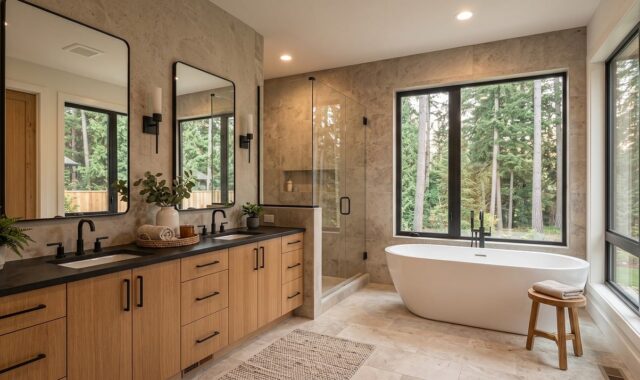
Mineral finishes such as natural stone, ceramic tile, porcelain tile and terrazzo are valued for durability, cleanability and design range. Porcelain is dense and often suited to wet areas and high-traffic floors. Ceramic tile is common for walls and moderate-use floors. Natural stone offers unique veining but needs careful sealing, slip-resistance review and cleaning guidance. Terrazzo can provide a long service life, although it usually requires specialist installation and a higher initial budget.
USGBC low-emitting material guidance treats materials such as stone, ceramic, glass, concrete and clay brick as inherently nonemitting when they have no integral organic-based coatings, binders or sealants. That does not mean every installation is emission-free, because adhesives, grouts, sealers and membranes may still affect indoor air quality.
Concrete, microcement and resin-based surfaces
Concrete can be polished, stained, sealed, ground or overlaid. It is used for floors, countertops and minimalist wall effects. Microcement and cementitious overlays can create a continuous look with fewer joints than tile, which is appealing in contemporary interiors. Resin-based finishes, including epoxy and polyurethane systems, are often selected for seamless floors in retail, hospitality and utility areas.
The key issues are cracking, substrate movement, slip resistance, UV stability and repairability. A seamless floor can look simple, but it depends heavily on substrate preparation and installer skill. Resin finishes can perform well in demanding settings, yet odor during installation, curing time and future repair methods should be understood before specification.
Metal, glass and high-pressure laminates
Metal finishes include stainless steel, brass, bronze, aluminum, powder-coated metal and decorative metal laminates. They are used for trims, stair details, cabinet fronts, furniture, partitions and feature walls. Glass appears in partitions, backsplashes, shelves, doors and decorative panels. High-pressure laminate is widely used for cabinetry, countertops, furniture and wall protection because it is consistent, durable and available in many colors and patterns.
These finishes work best when details are resolved early. Metals may scratch, patinate or show fingerprints. Glass requires safety glazing review and regular cleaning. Laminates need edge detailing, heat awareness and substrate compatibility. A clear specification names not only the face material, but also edge treatment, thickness, backing, finish direction and fixing method. See also: BUILDING MATERIALS.
Textile, carpet and acoustic finishes
Soft finishes include carpet, carpet tile, rugs, upholstered panels, curtains, fabric walling and acoustic baffles. They add comfort, sound absorption and visual softness. Carpet tile is practical in offices because damaged tiles can be replaced selectively. Upholstered panels and acoustic products can reduce reverberation in meeting rooms, restaurants and open-plan spaces.
The limitations include staining, dust retention, cleaning requirements and fire performance. In projects with allergy concerns or heavy food traffic, a soft finish may need a stronger maintenance plan. Acoustic value should be supported by product data rather than assumed from appearance alone.
How finish categories compare
| Finish type | Typical use | Strengths | Common limitations |
|---|---|---|---|
| Paint and coatings | Walls, ceilings, trim, doors | Affordable, easy to recolor, broad sheen range | Surface preparation and cleanability vary by product |
| Plaster | Feature walls, ceilings, luxury interiors | Depth, texture, mineral appearance | Requires skilled labor and careful repair planning |
| Wallpaper and wallcovering | Bedrooms, corridors, hospitality walls | Pattern, texture, fast visual impact | Moisture, seams and damage repair can be concerns |
| Wood and veneer | Floors, millwork, panels, ceilings | Warmth, natural grain, premium feel | Movement, scratching and moisture sensitivity |
| Tile, stone and terrazzo | Bathrooms, kitchens, lobbies, floors | Durable, cleanable, strong design range | Slip resistance, grout, sealing and installation cost |
| Concrete and resin | Floors, counters, retail and industrial-style spaces | Seamless or monolithic appearance | Substrate defects, cracking and repair visibility |
| Metal, glass and laminate | Details, cabinetry, partitions, wall protection | Precise, durable, modern finishes | Fingerprints, edges, scratches and detailing issues |
| Textile and acoustic finishes | Floors, panels, curtains, baffles | Comfort and sound absorption | Cleaning, staining and fire-rating checks |
Performance criteria designers should check
Indoor air quality and low-emitting claims
Low-emitting materials are important because finishes cover large interior surface areas. USGBC LEED v4.1 separates low-emitting material requirements into categories such as paints and coatings, adhesives and sealants, flooring, composite wood, ceilings, walls, insulation and furniture. This distinction matters because a low-VOC paint claim does not automatically cover the adhesive under a floor, the resin in a panel or the sealer on a stone surface.
UL Solutions describes GREENGUARD Certification as a program for products tested for low chemical emissions. Certification labels can be useful, but they should be read by scope. A product may be certified for emissions, recycled content, wood sourcing or lifecycle reporting; these are related claims, not interchangeable ones.
Durability, cleanability and traffic level
Every finish should be matched to expected wear. A matte wall finish may look refined in a bedroom but become frustrating in a narrow family entry. A polished stone floor may look elegant but require slip-resistance review near exterior doors. A wood countertop may age beautifully for some users and feel high-maintenance for others. Durability is not only hardness; it also includes stain resistance, abrasion resistance, edge stability, repairability and the availability of replacement material.
Moisture, heat and fire considerations
Bathrooms, kitchens, laundry rooms and basements need finishes that tolerate moisture and cleaning. In these areas, the full assembly matters: substrate, waterproofing, adhesive, grout, sealant and ventilation. Around stoves, fireplaces and commercial kitchens, heat resistance and code requirements become more important. For multi-family, hospitality, education and workplace projects, fire performance documentation may be required for wallcoverings, panels, textiles and acoustic products.
Maintenance and lifecycle information
A finish that looks sustainable at purchase may not perform sustainably if it fails early or cannot be repaired. The Resilient Floor Covering Institute describes environmental product declarations as Type III reports based on lifecycle assessment principles, which can help compare impacts within a defined scope. For practical projects, the maintenance plan is just as important as the label: cleaning chemicals, resealing intervals, refinishing options and replacement waste all influence long-term performance.
A practical workflow for choosing interior finishes
- Start with the room conditions. Identify moisture, sunlight, traffic, cleaning frequency, acoustics and safety requirements before looking at colors.
- Define the design role. Decide whether the finish should recede, create contrast, add texture, improve acoustics or provide durability.
- Shortlist by surface and substrate. Check whether the existing wall, floor or ceiling can support the finish without excessive preparation.
- Request real samples. Review color, texture and sheen under the project lighting. For natural materials, ask about acceptable variation.
- Check performance documents. Look for emissions data, fire ratings, slip ratings, cleaning instructions, warranties and installation requirements where relevant.
- Coordinate edges and transitions. Many finish failures occur at corners, thresholds, trims, joints and penetrations rather than in the main field area.
- Plan maintenance from day one. A finish is only successful if the owner can clean, repair and replace it realistically.
Common mistakes when specifying finishes
The first mistake is choosing by image alone. Online photos rarely show texture, glare, seams, acoustic behavior or wear. The second mistake is assuming that expensive finishes are automatically more durable. Some luxury materials are deliberately delicate and need controlled use. The third mistake is treating sustainability claims as identical. Certified wood, low chemical emissions, recycled content and lifecycle reporting answer different questions.
Another frequent issue is ignoring installation sequencing. A fine plaster wall can be damaged by late electrical work. A finished timber floor can be scratched during cabinet installation. A stone countertop can be stained by incompatible sealers or cleaners. Finish schedules should be coordinated with construction timing, protection methods and handover instructions.
Frequently asked questions
What are the basic types of finishes in interior design?
The basic types include paint, plaster, wallpaper, wood, veneer, laminate, tile, stone, concrete, metal, glass, carpet, textiles, acoustic panels and specialty coatings. In practice, finishes are usually selected by surface, such as wall finish, floor finish, ceiling finish or furniture finish.
Which interior finish is the most durable?
There is no single most durable finish for every situation. Porcelain tile, terrazzo, high-pressure laminate, stainless steel and resin floors can all be durable when used correctly. The right answer depends on traffic, moisture, cleaning, impact risk, slip resistance and repair expectations.
Are low-VOC and low-emitting finishes the same thing?
Not always. VOC content generally refers to the amount of volatile organic compounds in a product formulation, while emissions testing evaluates what a product releases into indoor air under defined test conditions. For careful specifications, especially in commercial or wellness-focused interiors, the exact claim and test scope should be reviewed.
How should finishes be selected for a small home project?
Begin with the surfaces that experience the most wear: floors, kitchen walls, bathroom areas, doors and trims. Choose durable, cleanable finishes there, then use more decorative or delicate materials on lower-risk feature areas. Samples are essential because sheen and texture can change significantly under different lighting.
What information should be included in an interior finish schedule?
A useful finish schedule should name the material, manufacturer or product reference if available, color, sheen, size, thickness, substrate, installation method, edge detail, grout or joint treatment, sealant, performance requirement and maintenance note. Clear schedules reduce substitutions and installation errors.