Bedroom furniture design ideas for a calmer, better planned room

What bedroom furniture design needs to solve first
Good bedroom furniture design is not just a matter of matching a bed frame, dresser and nightstands. The best bedrooms work because the furniture supports sleep, movement, storage and everyday routines. A calm room usually has a clear focal point, enough space to move around the bed, storage that keeps clutter out of sight and materials that remain comfortable over time.
Recent design research points in the same direction. The American Society of Interior Designers’ 2025 Trends Outlook emphasized wellness, sustainability, inclusivity and personal storytelling in interiors. Houzz’s 2026 U.S. design reporting also described warmth, natural materials, built-ins and textured surfaces as important whole-home directions. For bedrooms, the practical takeaway is clear: furniture should help the room feel restorative, not only styled for a photo.
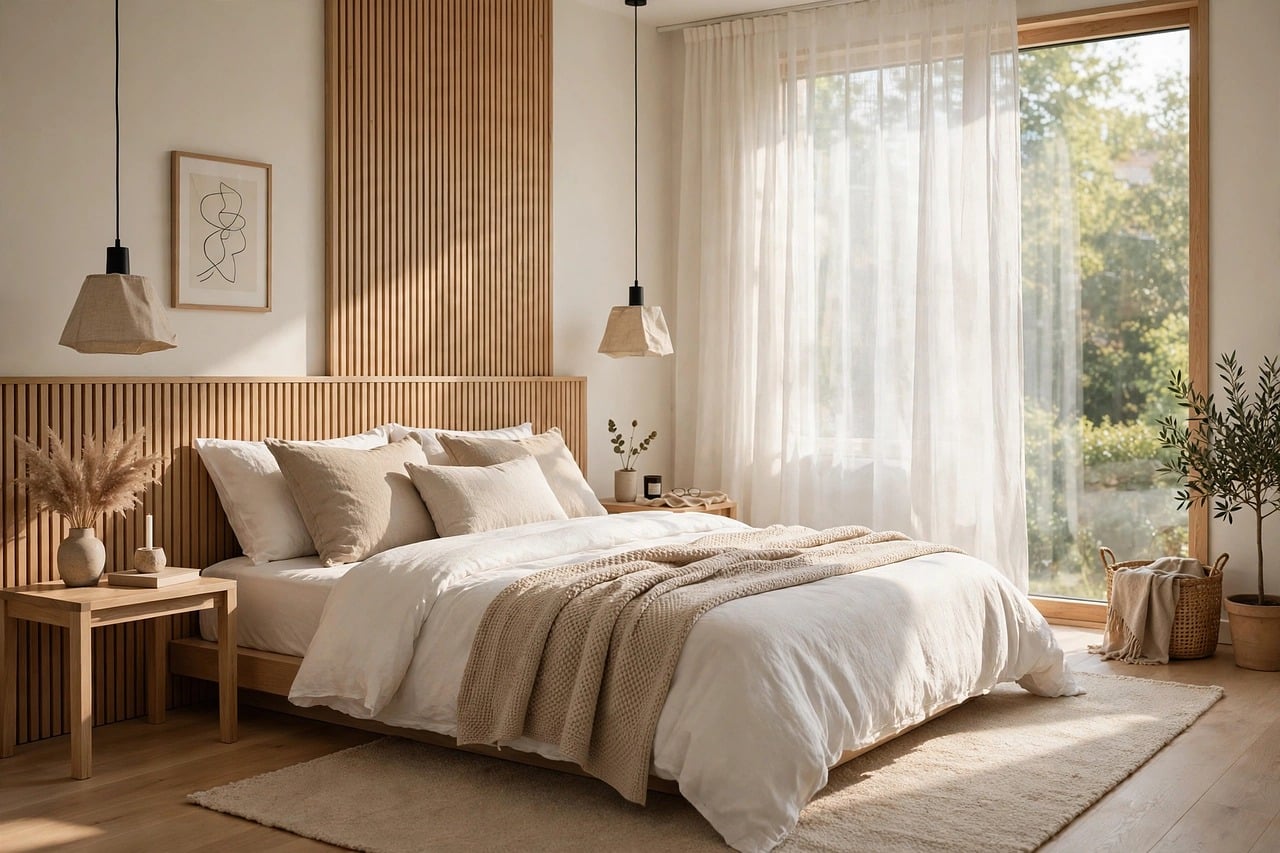
For broader planning inspiration, see the site’s furniture design category.
| Design decision | Why it matters | Practical direction |
|---|---|---|
| Bed placement | Controls movement, symmetry and the room’s visual center | Place the bed where access feels natural and the headboard has a stable wall behind it |
| Storage type | Affects clutter, safety and usable floor area | Combine closed storage with a few open surfaces for daily items |
| Material selection | Influences durability, indoor air concerns and long-term appearance | Check composite wood compliance, finish quality and repairability |
| Bedside lighting and cable management | Supports reading, relaxing and safe nighttime movement | Use bedside lighting, dimming and furniture that helps conceal cable clutter |
| Scale | Determines whether the room feels calm or crowded | Choose fewer, better-sized pieces instead of filling every wall |
Start with the bed, then plan circulation
The bed is usually the largest object in the room, so it should be the first decision in a bedroom furniture plan. A common mistake is choosing the largest mattress possible and then trying to fit storage around it. That approach can make the room feel tight even when the individual furniture pieces are attractive.
Start by identifying the wall that gives the bed a settled position. In many rooms, this is the longest uninterrupted wall or the wall opposite the main entrance. Placing the headboard against a stable wall usually gives the room a stronger sense of order. If the bed must sit under a window, use a lower headboard or a simple upholstered panel so curtains, daylight and ventilation can still function properly.
Use symmetry carefully
Matching nightstands and lamps can make a bedroom feel balanced, especially in a primary bedroom. Strict symmetry, however, is not always necessary. In a small room, one full nightstand and one wall shelf may work better than two bulky cabinets. In a guest room, a compact table on one side and a luggage bench at the foot of the bed may be more useful than a full dresser.
Keep walkways visually clear
Circulation should be planned before decorative accessories. Leave enough room to open drawers, make the bed and move around at night without hitting sharp corners. If the room is narrow, consider rounded nightstands, floating shelves or a platform bed without an oversized footboard. The goal is not empty space for its own sake; it is a room that feels easy to use every day.
Storage should reduce visual noise
Bedroom storage has become a larger part of furniture design because bedrooms often do more than support sleep. They may hold clothing, bedding, personal technology, hobby items and seasonal pieces. When too much is visible, the room can feel busy even if it is technically organized.
Closed storage is usually the most restful option for a sleep space. Dressers, wardrobes, under-bed drawers and built-in closets can hide visual clutter. Open shelves can still work, but they need editing and should be used for a limited number of objects. If every shelf becomes a display surface, the furniture stops helping the room feel calm.
- For small bedrooms: consider storage beds, wall-mounted nightstands, shallow dressers and wardrobes with sliding or pocket doors.
- For primary bedrooms: combine bedside drawers, a main dresser and closet systems so daily clothing does not pile up on chairs.
- For guest bedrooms: provide a luggage bench, a few hangers and one empty drawer rather than oversized storage that guests may not need.
- For children’s bedrooms: prioritize low, stable storage, rounded edges and easy-to-reach bins.
Safety is part of storage design. The U.S. Consumer Product Safety Commission has repeatedly highlighted furniture tip-over risks, especially with clothing storage units such as dressers and armoires. A mandatory U.S. stability standard for clothing storage units took effect in September 2023. Even with newer standards, anchoring tall or heavy storage furniture remains a practical precaution, particularly in homes with children.
Materials and finishes are moving toward warmth and responsibility
Current bedroom furniture design is moving away from cold, flat interiors and toward warmer, more tactile rooms. This does not mean every bedroom needs rustic furniture. It means wood grain, woven textures, soft upholstery, matte finishes and layered neutrals are being used to make bedrooms feel less hard-edged.
Houzz’s 2026 U.S. design trend coverage described warmth, earthy color stories, natural materials and built-ins as recurring directions across interiors. Its summer trends report also noted strong search growth for biophilic design, a whole-home concept focused on bringing nature into the built environment. In a bedroom, this may translate into wood furniture, linen-look fabrics, soft green or clay tones, cane panels, wool rugs or simple furniture forms that allow plants and daylight to become part of the composition.
Wood, veneer and composite wood need different questions
Solid wood, wood veneer and engineered panels can all be appropriate in bedroom furniture, but they should not be judged by appearance alone. Solid wood is repairable and long-lasting, but it can move with humidity and usually costs more. Veneer can provide a real wood surface with stable construction, but edge quality matters. Composite wood can be efficient and affordable, but buyers should check compliance with formaldehyde emission rules when relevant.
The U.S. Environmental Protection Agency’s TSCA Title VI rules apply to regulated composite wood products and finished goods sold, supplied, manufactured or imported in the United States after June 1, 2018. For bedroom furniture, that makes documentation and product labeling more meaningful than vague terms such as eco-friendly or non-toxic.
Certification claims should be specific
Responsible sourcing and sustainability claims need clear standards behind them. The Forest Stewardship Council explains that its certification is intended to verify wood and paper products from responsible sources. BIFMA’s e3 furniture sustainability standard, now in its 2024 edition, is a multi-attribute standard used mainly in business and institutional furniture, but it is still useful as a reference for how furniture sustainability can cover materials, energy, human health, ecosystem health and social responsibility. For residential bedroom furniture, the lesson is to look for named standards, not just green language.
Lighting, color and quiet details support sleep
Bedroom furniture works together with the sleep environment. The Sleep Foundation and the National Sleep Foundation both emphasize that light, noise and temperature affect sleep quality. Furniture cannot solve every sleep issue, but it can support a darker, quieter and less distracting room. See also: BUILDING MATERIALS.
Start with bedside function. A nightstand should hold only what is needed: a lamp, book, water glass, charging point or medication. If it becomes a storage dump, choose a nightstand with drawers instead of an open table. If phones and cables are visually distracting, select furniture with cord openings or place charging stations away from the bed.
Headboards also matter. Upholstered headboards can soften the room acoustically and visually, while wood or cane headboards can add texture without heavy decoration. Very tall, dark headboards can feel dramatic, but they may overpower a small bedroom. Low-profile headboards are often a better fit when the room has low ceilings, busy wallpaper or windows behind the bed.
Color should be treated as part of the furniture plan, not as a separate layer added at the end. Warm wood with cream upholstery creates a different mood than black metal with high-contrast bedding. Soft greens, taupes, warm whites, muted blues and clay tones are common bedroom-friendly palettes because they recede rather than compete for attention. The right palette is the one that supports the user’s routine and works with the room’s natural light.
Small and multi-use bedrooms need sharper editing
Many bedrooms now do more than one job. A spare bedroom may also be a home office. A child’s bedroom may include study space. A studio apartment may need the bed area to feel separate from the living area. In these rooms, bedroom furniture design has to be edited more strictly.
For small bedrooms, avoid duplicating functions. If the closet is strong, the room may not need a wide dresser. If the bed has drawers, the nightstands can be lighter. If a desk is necessary, a slim writing desk that can double as a vanity may work better than adding both pieces. The best small-room designs usually reduce the number of furniture categories instead of shrinking every item until none of them works well.
- Use vertical storage, but avoid tall pieces that feel unstable or block daylight.
- Choose beds with visible legs when the room needs a lighter appearance.
- Use mirrors to reflect light, not to fill every blank wall.
- Pick one main texture or wood tone and repeat it to reduce visual fragmentation.
- Use wall lights where table lamps would crowd the nightstand.
In a multi-use bedroom, the work zone should not dominate the sleep zone. A desk facing away from the bed, a closed cabinet for office supplies or a folding screen can help separate activities. If the room must include exercise equipment or hobby storage, use closed cabinets and keep the bed wall visually quiet.
A practical bedroom furniture design checklist
Before buying or rearranging furniture, review the room in a practical sequence. This helps prevent attractive but unsuitable choices.
- Measure the room: include doors, windows, radiators, outlets, closet openings and ceiling height.
- Choose the bed size realistically: comfort matters, but circulation and storage need space too.
- Plan bedside function: decide what each sleeper needs within reach.
- Match storage to behavior: use drawers for folded clothing, hanging space for longer garments and hidden bins for seasonal items.
- Check safety: anchor tall storage, avoid unstable stacks and consider rounded corners in family spaces.
- Review materials: look for clear information on wood type, finish, hardware and composite wood compliance.
- Limit finishes: repeat two or three main materials rather than mixing too many unrelated surfaces.
- Test the nighttime routine: confirm lighting, switches, pathways and charging points work after dark.
The strongest bedroom furniture design is usually not the most expensive or the most trend-driven. It is the plan that lets the room feel restful in the evening, efficient in the morning and durable enough to adapt over time.
Frequently asked questions
What is the most important piece in bedroom furniture design?
The bed is usually the most important piece because it controls the room’s layout, focal point and circulation. Storage is nearly as important. A beautiful bed will not make the room feel calm if clothing, bedding and daily items have no proper place.
Should bedroom furniture match exactly?
Exact matching is optional. A coordinated room can use repeated wood tones, similar hardware, shared proportions or a consistent color palette without requiring a complete matching set. This often creates a more personal and less showroom-like result.
What furniture works best in a small bedroom?
Small bedrooms usually benefit from a properly scaled bed, closed storage, floating nightstands, storage beds and furniture with simple lines. Avoid oversized footboards, deep dressers and too many accent pieces.
How can bedroom furniture support better sleep?
Furniture can support sleep by reducing clutter, hiding light from devices, improving bedside organization and helping the room feel dark, quiet and comfortable. Bedside lamps, blackout window treatments, soft textures and clear pathways all contribute to a more restful room.
What should buyers check before choosing sustainable bedroom furniture?
Look for specific information rather than broad claims. Useful details include wood sourcing, named certifications, composite wood compliance, finish type, repairability, replacement parts and whether the furniture is designed to last beyond a short trend cycle.